
How Much Does Chimney Flashing Repair Cost?
Our chimney repair starts at $49; HomeGuide reports typical U.S. chimney flashing repairs cost $300 to $1,800 in 2026. The final amount depends on whether the flashing needs a small patch or full replacement, plus any damage around the chimney.
Our Starting Prices in Denver
| Service | Price |
|---|---|
| Chimney Sweep | from $59 |
| Chimney Repair | from $49 |
| Chimney Inspection | free in-home inspection |
| Chimney Cleaning | from $59 |
Need help now? (720) 780-8924
What Does Chimney Flashing Repair Cost in Practice?
HomeGuide’s 2026 estimate for typical U.S. chimney flashing repair is $300 to $1,800. A reseal or patch may run about $200 to $500, while full replacement on a large chimney can reach $1,800 or more. These are market estimates, not our prices.
Our listed starting price for chimney repair is $49; that is a general repair starting price, not a quoted price for every flashing job. The actual scope depends on the condition of the metal, the chimney size, and whether water has damaged nearby shingles or masonry. See our prices for the listed service starting prices.
HomeGuide says labor typically accounts for 60% to 70% of a flashing repair bill. That is why a repair involving removal and replacement can cost much more than sealing a small, accessible gap. For a broader look at chimney work, see how much chimney tuckpointing costs.
Which Chimney Flashing Repair Fits the Damage?
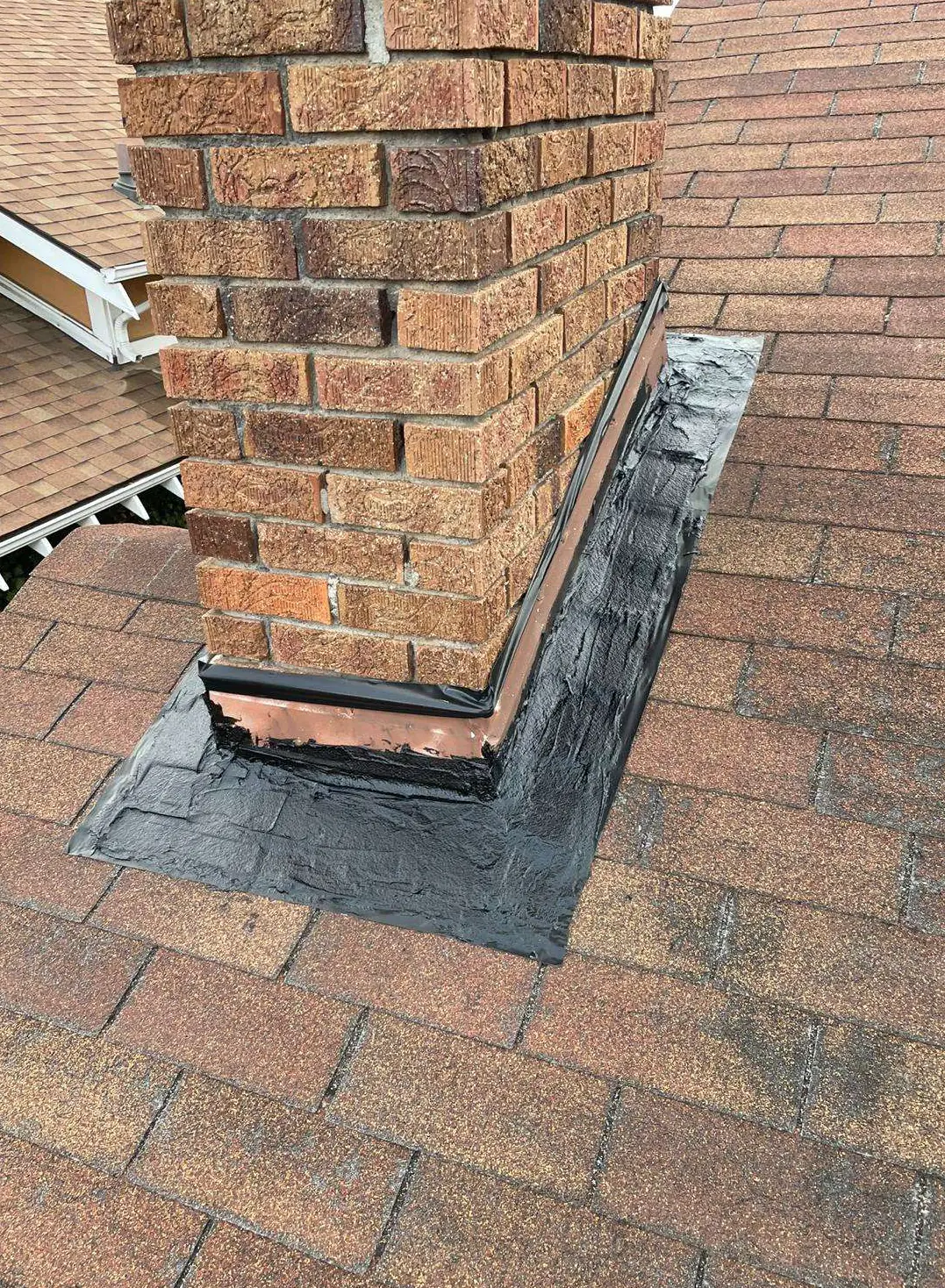
Flashing is the metal system that closes the joint where the chimney passes through the roof. The right repair depends on whether that joint has a small seal failure, damaged metal, or water damage beyond the flashing itself.
Reseal or patch
This may fit a localized gap or failed seal when the metal remains sound and properly positioned. A patch is not a lasting fix for rusted or missing flashing.
Replace the flashing
Replacement is usually needed when the metal is rusted, sections are missing, or water is getting beneath the shingles, according to HomeGuide. The roofer or chimney professional must account for how the flashing meets both the chimney and roof.
Repair related damage
A leak can affect nearby roof materials or chimney masonry, so replacing flashing alone may not address every source of water entry. Ask for the inspection to identify the damaged parts separately from the flashing.
Which Starting Price Applies to Your Leaking Chimney?
These common situations show how to use our listed prices without treating a starting price as a final quote.
- You see a ceiling stain but cannot locate the entry point — Start with our free in-home inspection. A stain near the chimney does not prove the flashing is the source; water can travel before it shows indoors.
- The inspection finds a repair is needed — Our chimney repair starts at $49. The listed starting price does not establish the cost of a specific flashing repair; the scope depends on what the inspection finds.
- The metal is rusted or partly missing — This may call for flashing replacement rather than another patch. HomeGuide’s typical U.S. repair range is $300 to $1,800, but that market estimate is not our service price.
Need help now? (720) 780-8924
What Can You Check Safely Before a Flashing Visit?
You can gather useful clues without climbing onto the roof. Do not step onto a wet, snowy, icy, or steep roof; leave roof-level inspection and repair to a professional.
- Note when the leak appears — Write down whether water shows up during rain, after snow melts, or in both conditions. The timing helps narrow down whether the opening is active during particular weather.
- Photograph the indoor stain — Take a clear picture and note its location relative to the fireplace or chimney. Check whether the stain grows after the next storm rather than relying on a single observation.
- Look for attic-side moisture — From a safe, accessible attic area, look for damp wood or water marks near the chimney opening. Do not touch exposed wiring or disturb insulation to reach a spot.
- Inspect the roofline from the ground — Use binoculars or a zoomed photo to look for visibly lifted, bent, or missing metal around the chimney. A ground view cannot confirm whether the flashing is sealed beneath the shingles.
- Keep track of prior roof work — If you know when the roof or chimney was last repaired, share that information. It can help distinguish an old seal failure from a newer issue around the roof-to-chimney joint.
- Keep water away from stored items — Move belongings from beneath an active drip and use a container to catch water indoors. If the ceiling bulges or begins to sag, keep clear of the area and contact an appropriate building professional.
- Share the clues when booking — Send or describe the photos, leak timing, and visible damage when you arrange a visit. We can inspect the flashing and identify whether the repair also involves nearby roof or masonry components.
Why a Small Flashing Leak Can Become a Larger Repair
Water entering at the chimney can spread beneath roofing or into surrounding materials before it appears as an indoor stain. Repeated wetting can damage roof decking, interior finishes, or masonry, so a stain that returns after rain deserves attention rather than another coat of surface sealant.
Denver’s normal annual precipitation is 14.48 inches and normal annual snowfall is 49.0 inches, according to the National Weather Service Boulder’s Denver Annual Weather Summary. Snowmelt and rain can both expose a weak roof-to-chimney joint; record when the leak appears and arrange an inspection before the affected area grows.
A patch over rusted metal or missing flashing can leave the water path open. If the flashing is intact but the chimney masonry is deteriorating, the repair may involve a different component; our guide to chimney chase covers and replacement signs covers another common top-side water entry point.
What Happens During a Chimney Flashing Repair Visit?
The visit starts with checking the roof-to-chimney joint and looking for signs that water has reached nearby roofing or masonry. After identifying the affected parts, the work may involve resealing a sound section, patching a localized defect, or removing and replacing damaged flashing.
Visit length depends on the scope: inspecting and sealing a localized issue is less work than removing and replacing flashing around a larger chimney, especially when surrounding materials also need repair. We provide free in-home inspections, so you can have the suspected leak assessed before deciding on repair work.
To book, call Denver Chimney Sweep Pros at (720) 780-8924 and describe the leak, when it appears, and any visible damage. We serve Denver and towns within 60 miles, and same-day service is available. For the service details, visit our chimney flashing repair service page.
Need help now? (720) 780-8924
When Should You Arrange Chimney Flashing Repair?
Arrange an inspection when you see rust, missing metal, a recurring ceiling stain near the chimney, or water appearing after rain or snowmelt. Those signs do not identify the exact failure by themselves, but they are reasons to check the roof-to-chimney joint before the leak spreads.
If the source is unclear, an inspection can separate a flashing problem from damage to the chimney crown, masonry, or another roof component. If the inspection confirms flashing damage, the repair plan should state whether it calls for resealing, patching, or replacement and identify any related water damage.
Frequently asked questions
Does chimney flashing always need to be replaced when it leaks?
No. A localized seal failure may be repairable when the flashing metal is still sound and correctly positioned. Rust, missing sections, or water getting under the shingles can point to replacement instead.
How long does a chimney flashing repair visit take?
The visit length depends on the work required and the condition of the surrounding roof and masonry. A localized seal repair involves less work than removing and replacing flashing or addressing additional water damage.
Can I seal chimney flashing myself?
Do not climb onto a wet, snowy, icy, or steep roof to inspect or seal flashing. A surface patch can also miss rust, missing metal, or water damage beneath the shingles, so arrange a chimney inspection when you see an active or recurring leak.
Is chimney flashing repair covered by homeowners insurance?
Coverage depends on your policy and the cause of the damage, so review your policy and contact your insurer before authorizing covered work. Photos of the leak and an inspection identifying the damaged components can help you provide clear information.
Get the Flashing Checked
Share when the leak appears and what you have seen. Call (720) 780-8924 to book a free in-home inspection.