
Chimney Liner Service
Chimney Liner Installation in Denver, CO
Chimney liner installation in Denver can address a damaged, missing, or mismatched flue liner. We inspect the chimney and appliance, then identify the liner work needed to support proper venting.
- Open 24 hours a day, 7 days a week
- Same-day service
- Free in-home inspections
- 10-year warranty
Get a fast quote
When Chimney Liner Installation in Denver Is Needed
A liner separates the flue gases from the chimney structure and helps direct them out of the home. A damaged or poorly matched liner can affect venting and leave surrounding masonry exposed to heat and combustion byproducts. We serve Denver and towns within 60 miles, traveling to your home to assess the chimney and appliance.
Cracked or deteriorating flue tiles
Visible cracks, missing tile sections, or crumbling material can mean the existing flue no longer forms a sound passage. We assess the condition and whether a new liner is appropriate.
A changed fireplace or heating appliance
A replacement appliance may require a liner that matches its fuel and venting requirements. We check the appliance details and chimney dimensions before identifying the installation approach.
A chimney fire or suspected flue damage
Heat from a chimney fire can damage flue tiles and mortar, even when the damage is not obvious from the fireplace opening. CSIA recommends a Level 2 inspection after a fire; that inspection includes a video scan.
Smoke or venting concerns
Smoke entering the room or signs of poor draft deserve a chimney assessment, because a liner problem may be one of several causes. We inspect the flue and consider the fireplace or appliance connected to it.
An older or missing liner
A missing liner, or one that has worn out over time, may call for a new flue liner installation. We check the existing chimney before deciding what work fits its condition.
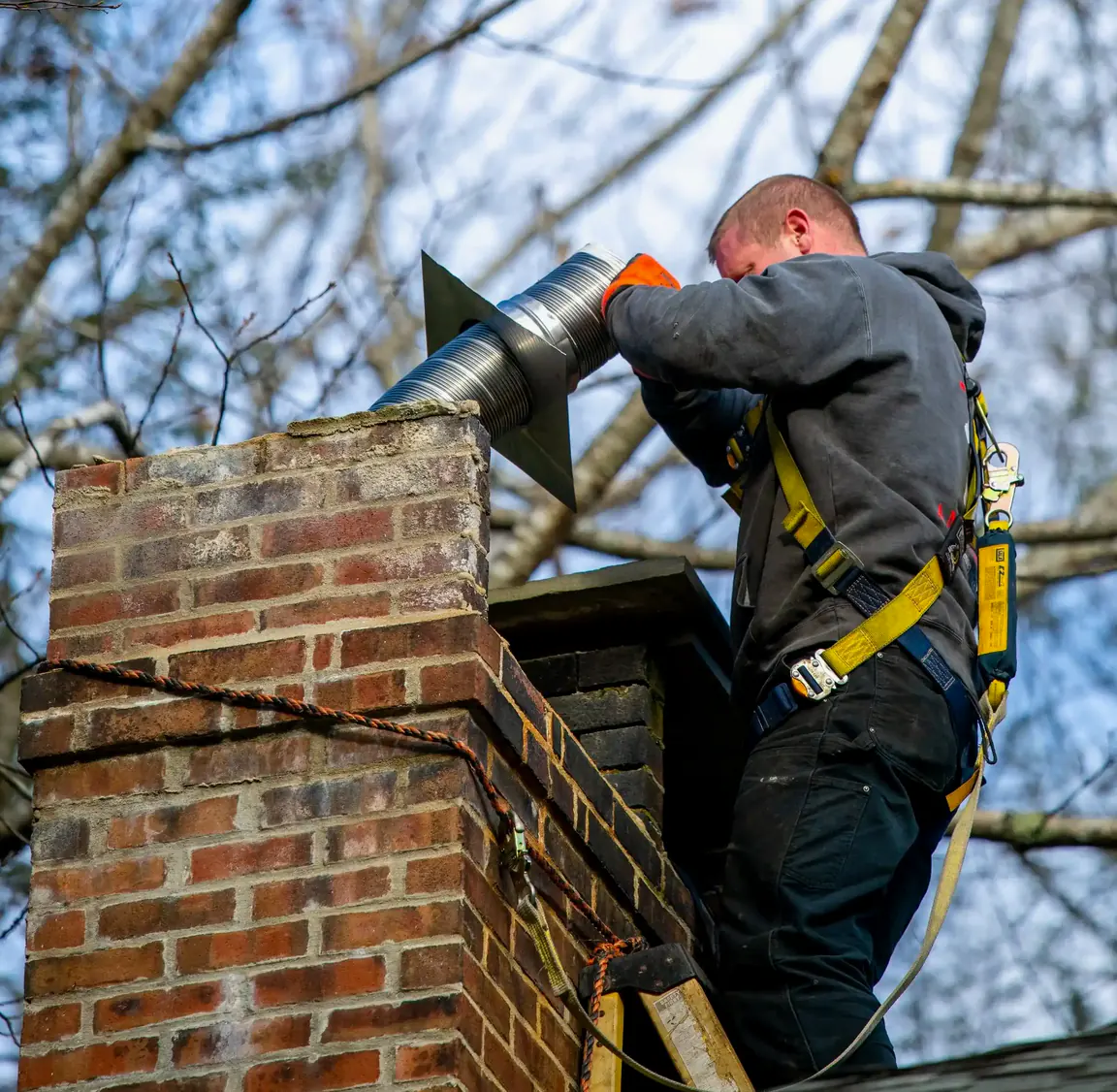
What Our Denver Chimney Liner Installation Covers
A suitable installation starts with the existing chimney and the appliance it serves. The liner type, fuel, dimensions, flue condition, and access all affect the work; the goal is to fit the liner to the system rather than treat every chimney the same.
- Review the existing flue — We examine the chimney’s condition and look for damage or obstructions that could affect the installation.
- Check the appliance and fuel — A fireplace and a gas or oil appliance have different venting needs. We use the appliance information to guide the liner selection and installation requirements.
- Assess liner fit and route — The flue’s size, shape, height, and access influence which liner system can fit. Those details also help identify preparation or repair work needed before installation.
- Install a compatible liner — We install the selected liner through the chimney and connect it to the appliance or fireplace as the system requires.
- Check relevant insulation requirements — CSIA’s homeowner guidance says liners serving solid-fuel appliances need insulation, while gas or oil liners do not need it to meet manufacturer installation and warranty requirements. The appliance type therefore matters when planning the job.
- Identify related chimney work — If inspection reveals damaged masonry, a crown issue, or another repair need, we can also handle chimney repair. Addressing the condition around the liner can be important to a sound installation.
Need help now? (720) 780-8924
How a Chimney Liner Is Installed at Your Home
You do not need to choose a liner before the inspection. Have the appliance make and model information available if you have it, and tell us about any smoke, draft, or fire concerns so we can consider them during the assessment.
- Inspect the chimney and appliance — We review the flue condition, chimney access, and appliance details to establish what the installation must accommodate. CSIA’s Level 2 inspection standard includes a video scan and is recommended when relining.
- Determine the liner requirements — We use the chimney’s measurements and the appliance’s fuel and venting requirements to identify a compatible liner and any preparation needed before it goes in.
- Fit and connect the liner — The liner is installed through the chimney and connected to the appliance or fireplace. HomeGuide reports that liner installation usually takes 4 to 8 hours; the condition and access of an individual chimney can affect the work.
- Review the completed work — We check the installation and connection in relation to the chimney and appliance. If you also need routine buildup removed, ask about chimney sweep service; relining does not replace ongoing inspection and cleaning.
What Affects Chimney Liner Installation Cost in Denver
The price depends on the liner material and dimensions, chimney height and shape, access to the flue, appliance type, and the condition of the existing chimney. Repairs or removal of a damaged liner can add work, so an on-site assessment is the practical way to determine what your home needs. Our listed starting prices cover chimney sweep, chimney repair, chimney inspection, and chimney cleaning—not liner installation.
We provide free in-home inspections so the chimney and appliance can be assessed before you decide on the work. A homeowner comparing chimney liner installation companies should ask whether the recommendation accounts for the appliance, flue condition, and any insulation requirements—not just the liner itself. Request an inspection to get a quote based on your chimney.
Need help now? (720) 780-8924
Why Denver Homeowners Choose Our Chimney Liner Service
Owner Robert (Bob) Anderson brings 28 years of experience with chimneys, and our team serves Denver and towns within 60 miles by coming to your home. We are licensed and insured, offer same-day service, and back the work with a 10-year warranty. For routine care alongside a liner project, our chimney sweep in Denver service can address buildup that a liner installation does not remove.
More on chimney liner installation
Related services
Guides on chimney liner installation
Frequently asked questions
How can I tell whether my chimney liner needs replacement?
Cracked or missing flue tiles, crumbling material, smoke entering the room, or a suspected chimney fire are reasons to arrange an inspection. A video scan can help assess concealed flue areas; CSIA recommends a Level 2 inspection when relining.
Can you install a liner for a gas fireplace or heating appliance?
Yes, we offer chimney liner installation for appliances that need it. We check the appliance and its venting requirements, because liner and insulation requirements differ by fuel and system.
How long does chimney liner installation take?
HomeGuide reports that installation usually takes 4 to 8 hours. Chimney access, the liner route, and any needed preparation or repairs can affect the time at your home.
Does a new liner mean I no longer need chimney cleaning?
No. A liner does not remove deposits from the flue or replace routine inspection. CSIA’s homeowner guidance says chemical creosote products are not a substitute for mechanical sweeping and an annual inspection.
Can you install a liner after a chimney fire?
We can assess the chimney and handle liner installation when it is appropriate. CSIA recommends a Level 2 inspection after a fire, including a video scan, because damage can extend beyond what is visible at the fireplace opening.
Do you travel to my home for chimney liner replacement?
Yes. We travel to homes in Denver and towns within 60 miles, so homeowners looking for a chimney liner near me can arrange an in-home assessment. We inspect the existing flue and appliance before identifying the replacement work.
Get Your Chimney Liner Assessed
Book a free in-home inspection to assess your flue, appliance, and liner needs.