
How Much Does a Chimney Liner Cost?
Our chimney repair starts at $49; a new chimney liner typically costs $1,500 to $4,000 in the U.S., according to HomeGuide (2026). The final scope depends on the liner material, appliance, flue condition, and whether the liner needs insulation.
Our Starting Prices in Denver
| Service | Price |
|---|---|
| Chimney Sweep | from $59 |
| Chimney Repair | from $49 |
| Chimney Inspection | free in-home inspection |
| Chimney Cleaning | from $59 |
Need help now? (720) 780-8924
What Chimney Liner Installation Cost Covers
HomeGuide’s 2026 U.S. estimates put a new chimney liner at $1,500 to $4,000 on average. Its typical range for stainless steel is about $900 to $3,800, while cast-in-place or clay liners are about $2,000 to $7,000. These are general market estimates, not our prices.
The material is only part of the decision. The estimate should account for the appliance and fuel, flue dimensions and condition, access, and whether the liner system requires insulation. Ask for the proposed material and the work included in writing, so you can compare the same scope rather than just the headline figure.
Which Chimney Liner Option Fits Your Appliance
The right liner depends on what the chimney serves and what the existing flue can support. A chimney sweep can inspect the flue and match the proposed liner to the appliance before installation.
Stainless steel
A common option for relining an existing chimney. HomeGuide gives a typical U.S. range of about $900 to $3,800; the exact fit depends on the appliance and flue measurements.
Cast-in-place
This liner is formed inside the chimney. HomeGuide places cast-in-place liners in a combined cast-in-place or clay range of about $2,000 to $7,000, so confirm which material and scope the estimate covers.
Clay tile
A clay liner may suit some masonry chimney configurations. The existing flue condition and appliance requirements determine whether it is an appropriate choice.
What Changes a Chimney Liner Installation Estimate
These details help explain why two liner estimates can differ. Bring what you know about the fireplace or heating appliance to the inspection; the flue itself still needs to be assessed.
- Appliance and fuel — A solid-fuel appliance has different liner insulation requirements from gas or oil equipment. CSIA says solid-fuel liners need insulation, while gas or oil liners do not need it to meet manufacturer installation and warranty requirements.
- Flue dimensions and route — The liner must suit the chimney’s size and path. Ask how the proposed liner size was determined and whether the chimney’s full route was checked.
- Existing damage or deposits — Cracked flue tiles, heavy deposits, or other damage may affect the work needed before a liner can be installed. Ask the inspector to show you the condition and identify any separate repairs.
- Inspection scope — CSIA recommends a Level 2 inspection when relining; that inspection includes a video scan. The CSIA Level 2 inspection guidance explains when this added inspection is recommended.
Need help now? (720) 780-8924
How Our Starting Prices Apply to Liner-Related Visits
An inspection to assess the flue starts with our free in-home inspection. If an inspection identifies separate chimney repair, our listed chimney repair price starts at $49; chimney sweeping and cleaning each start at $59. Those are prices for those services, not a quoted chimney liner installation price.
For a liner project, the U.S. market estimates above can help you understand typical material costs, but a site assessment is needed to define the work. Review our prices for the listed services, and see the chimney liner installation service details before booking.
What Happens During a Chimney Liner Installation
A liner project starts with checking the appliance and chimney, then selecting a compatible system and confirming that it is correctly installed. HomeGuide says installation usually takes 4 to 8 hours; the actual visit length depends on the chimney and job scope.
- Identify the appliance — The sweep records whether the chimney serves a wood, gas, or oil appliance. Check that the proposed liner is intended for that fuel and appliance.
- Inspect the chimney — The sweep checks the flue and chimney condition; a Level 2 inspection for relining includes a video scan under CSIA guidance. Review any findings that could change the scope before work proceeds.
- Measure the flue — Measurements of the flue help determine the liner’s size and route. Ask how the selected size matches the appliance requirements.
- Choose the liner material — The proposal should name the liner material and intended use. Check that the material matches the appliance and the existing chimney configuration.
- Confirm insulation needs — CSIA says solid-fuel liners need insulation; gas and oil liners do not need it to meet manufacturer installation and warranty requirements. Check that the estimate states whether insulation is included where required.
- Prepare the flue — The existing chimney may need cleaning or repair before the liner goes in. Confirm that any additional work is identified separately in the scope.
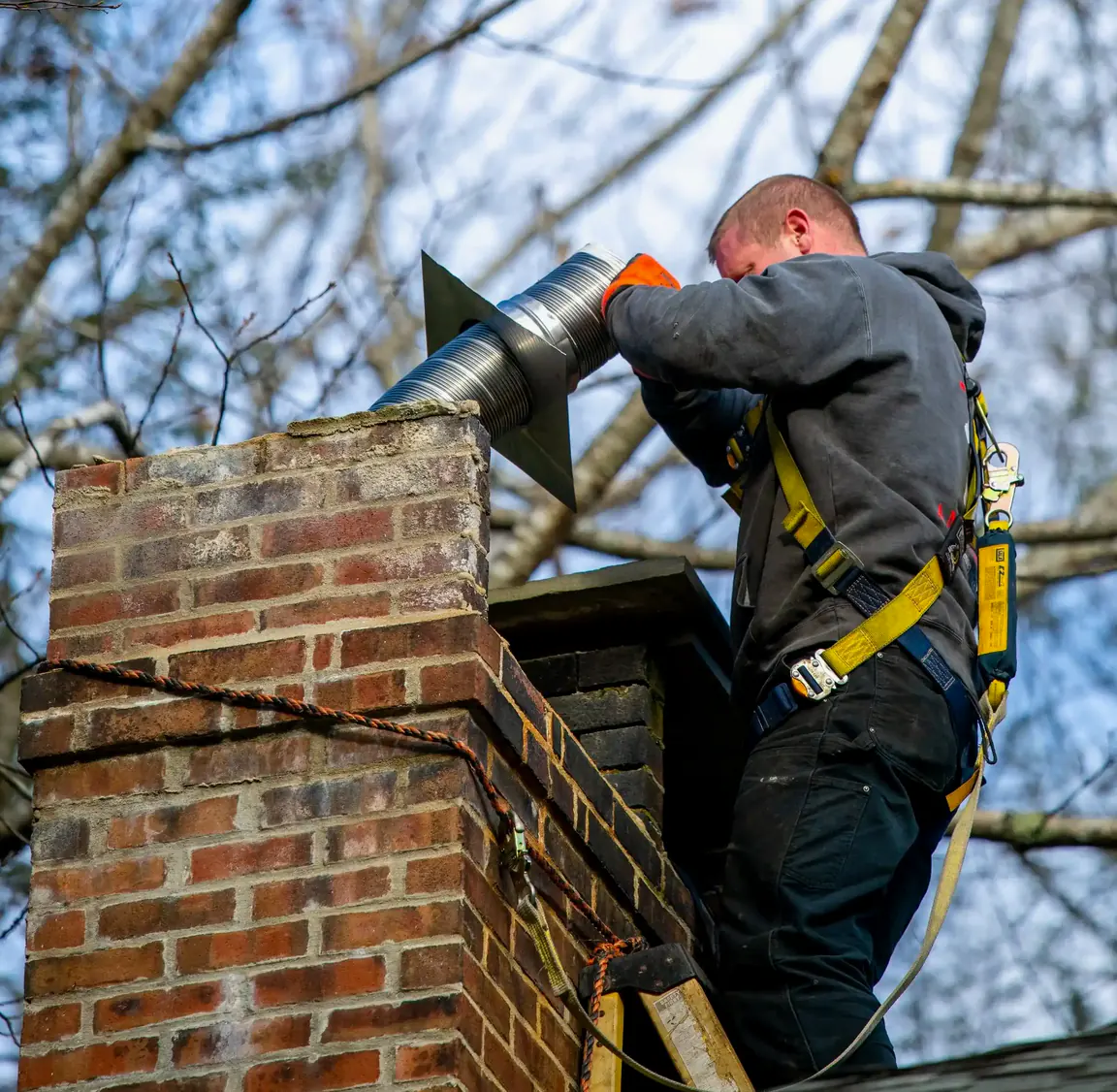
- Install and connect the liner — The liner is fitted through the chimney and connected for the appliance it serves. Check that the finished connection and included components match the written scope.
- Review the completed work — Before using the appliance, ask for the completed work and any care instructions to be reviewed with you. Keep the inspection findings and installation details with your home records.
Signs Your Chimney May Need a Liner Assessment
A visible symptom does not identify the cause by itself. Stop using the appliance and arrange a chimney inspection when you notice damage or changes in how it operates.
- Cracked or missing flue tiles — Visible cracks or gaps in a masonry flue can signal damage that needs assessment before continued use.
- Smoke entering the room — Smoke that spills into the living space can point to a drafting, blockage, or appliance problem; an inspection can distinguish among them.
- A change of appliance — Changing the appliance can change what the chimney and liner need to support. Have the flue assessed before connecting the replacement.
- Past chimney fire or major weather event — Damage may be hidden inside the flue. CSIA recommends a Level 2 inspection after a fire or weather event, and when relining.
Need help now? (720) 780-8924
How to Avoid a Mismatched Chimney Liner
Do not choose a liner by material price alone or assume an old liner will suit a different appliance. A wrong size, unsuitable material, or omitted insulation where required can leave the system mismatched to its use. Get the appliance, flue condition, proposed liner, and included work documented before approving the project.
A liner quote may also uncover separate issues at the crown or chimney structure. For those distinct repairs, read how much chimney crown repair costs or how much it costs to rebuild a chimney; neither repair is the same as relining.
Frequently asked questions
How long does chimney liner installation take?
HomeGuide (2026) says liner installation usually takes 4 to 8 hours. The chimney’s layout, condition, and required preparation affect the time for a specific project.
Does a gas fireplace need an insulated chimney liner?
CSIA says liners for gas or oil appliances do not need insulation to meet manufacturer installation and warranty requirements. Solid-fuel appliance liners do need insulation, so confirm the fuel type and appliance requirements during the inspection.
Should I replace a liner when I change my fireplace or stove?
Have the chimney assessed before connecting a different appliance because the liner must suit the appliance and flue. CSIA recommends a Level 2 inspection when an appliance changes, and that inspection includes a video scan.
Can I keep using my fireplace if the flue liner is damaged?
Do not use the fireplace until a chimney professional has assessed visible flue damage. A cracked or deteriorated liner can affect the chimney’s ability to contain heat and combustion gases.
Get Your Chimney Liner Assessed
Book a free in-home inspection with Denver Chimney Sweep Pros to have the flue condition and liner needs assessed before you approve the work.