
Do Chimney Sweeps Make a Mess in the House?
Do chimney sweeps make a mess? A well-prepared cleaning keeps most soot and debris contained at the fireplace, but fine dust can escape during brushing or when old buildup is disturbed.
Need help now? (720) 780-8924
Do Chimney Sweeps Make a Mess During Cleaning?
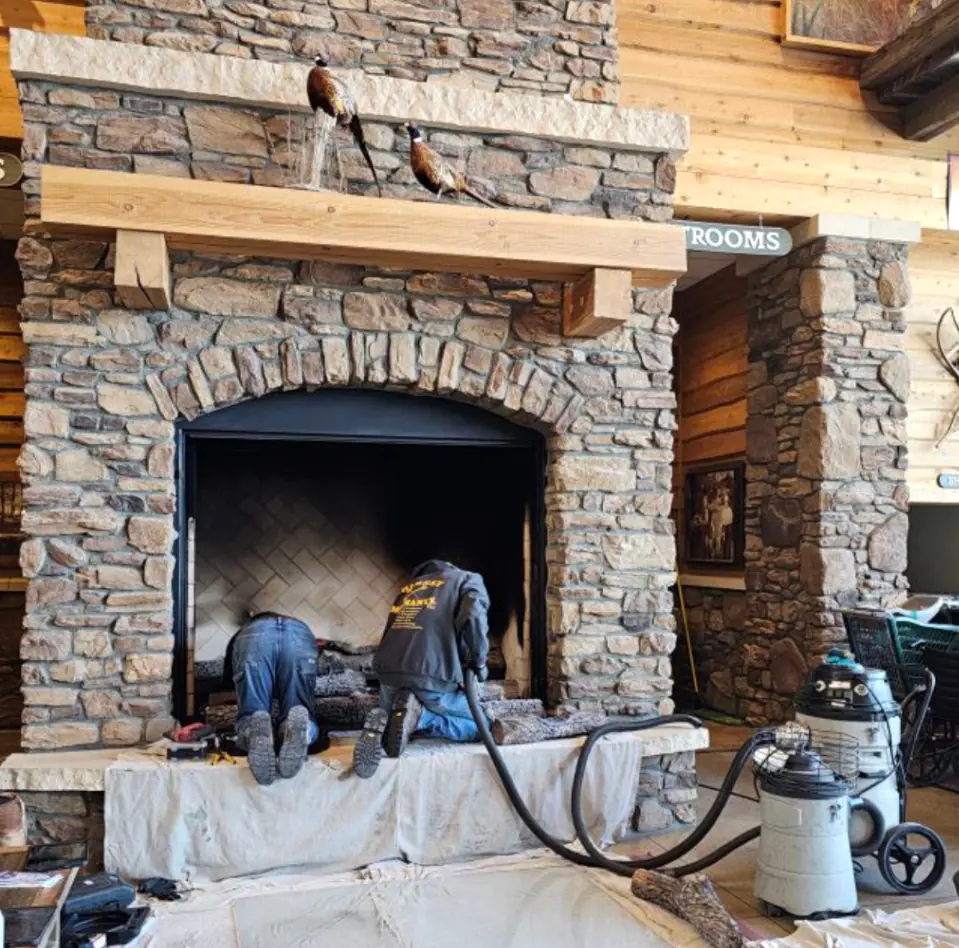
A chimney sweep should protect the floor and nearby furnishings before loosening soot or creosote. Most debris should stay within the fireplace opening or a controlled work area; a trace of fine dust can still escape, especially when the firebox already has loose ash or the chimney has heavy buildup.
Soot is light and easily spread by air movement, so an open fireplace, a running fan, or people walking through the room can carry particles farther than expected. Moving fragile items and keeping foot traffic away from the fireplace lowers that risk. A professional cleaning is not the same as a quick vacuum of the hearth: it addresses deposits in the flue and other parts of the system.
What to Move Before a Chimney Cleaning
A few minutes of preparation helps keep soot off the things you care about. Clear the area around the fireplace and tell the sweep about anything that could affect access or cleanup.
- Clear the hearth — Move fireplace tools, baskets, kindling and decorations away from the opening. Remove loose ash only if it is fully cold; leave uncertain or recent ash for the sweep to handle.
- Protect nearby belongings — Move rugs, chairs and small objects out of the work area. Cover large items that cannot be moved, especially light-colored upholstery and electronics.
- Make a clear path — Keep the route from the entrance to the fireplace free of bags, toys and other obstacles. This reduces the chance of tracking soot across the room.
- Keep pets and children away — Set up a separate area while tools and debris are being handled. A clear work zone makes it easier to keep the fireplace opening contained.
- Mention recent use or visible debris — Tell the sweep when the fireplace was last used and whether you have noticed falling soot, a strong odor or unusual smoke. Those details can help focus the inspection.
How a Careful Chimney Cleaning Keeps Soot Contained
Containment starts before brushing. These steps show what to look for as the work area is set up and cleaned.
- Check the fireplace before opening the work area — The sweep should look for loose ash, soot around the firebox and anything that could fall during cleaning. Confirm that the fireplace is cool and that the hearth has been cleared.
- Protect the floor and nearby surfaces — A drop cloth or protective covering should extend beyond the hearth where tools and materials will be handled. Check that it lies flat and covers the path beside the fireplace.
- Cover the fireplace opening — A temporary barrier or suitable vacuum setup helps keep loosened soot from entering the room. Make sure the opening is controlled before brushing begins.
- Use tools suited to the flue — The brush and rods should fit the chimney and reach the areas being cleaned. Watch for debris escaping around the opening or accumulating outside the protected area.
- Remove soot and creosote from the system — Brushing loosens deposits so they can be collected rather than left in the flue. The sweep should also check the firebox and reachable areas where debris can settle.
- Inspect the work area as cleaning proceeds — A growing pile of soot on the room side of the barrier means containment needs attention. Pause the work and ask for the opening and floor protection to be reset before cleaning continues.
- Collect debris and check the room — After cleaning, tools and collected debris should be removed carefully. Look over the hearth, floor coverings and nearby surfaces before the coverings come up.
Need help now? (720) 780-8924
How Fireplace Type Changes the Mess Risk
The kind of appliance and the condition of its flue affect where debris can collect. Tell the sweep what you have so the work area can be planned around the opening and access.
Open masonry fireplace
An open firebox leaves soot and ash exposed to the room, so floor coverage and a controlled opening matter. Loose material already on the hearth can add dust when it is disturbed.
Factory-built fireplace or insert
Panels, doors and narrow openings can change how tools reach the flue and how debris is contained. Keep the front of the unit clear and let the sweep handle parts that need to be opened.
Gas fireplace chimney
Gas appliances do not produce wood ash in the same way, but their chimneys can still collect debris or develop corrosion. CSIA recommends annual inspection of gas-heated chimneys because nests, debris and corrosion can obstruct or damage the flue.
What the Chimney Cleaning Should Address
A chimney cleaning should address deposits inside the chimney, not just visible soot on the hearth. The Chimney Safety Institute of America (CSIA) says mechanical brushing with a full system evaluation is the best way to clean a chimney; a hard, glazed deposit may need chemical treatment or rotary tools before it can be removed.
That system evaluation matters because debris can settle in places beyond the firebox. For a closer look at the difference between a sweep and a cleaning, read our chimney sweep vs. chimney cleaning guide. You can also review the details of our chimney cleaning service.
When Soot Outside the Fireplace Needs Attention
A small amount of dust during work is different from soot that repeatedly appears around the fireplace after use. Falling deposits, fresh black smudges near the opening, or debris coming down the flue are signs to stop using the fireplace until a sweep checks the chimney.
Do not brush debris farther into the flue or run a household vacuum over unknown deposits. Ask for an inspection that checks the flue and the fireplace area together. NFPA 211 calls for chimneys, fireplaces and vents to be inspected at least once a year for soundness, deposits and correct clearances; cleaning or repairs follow when needed, as CSIA explains in its homeowner resources.
Need help now? (720) 780-8924
How to Book a Chimney Cleaning Without Room Surprises
Tell us whether the fireplace burns wood or gas, whether it is open or has an insert, and what signs of soot you have noticed. That information helps us understand the setup before the visit. Heavy buildup, frequent use, difficult roof access and extra flues can add time, according to HomeGuide, so there is no single visit length that fits every chimney.
For a routine cleaning, expect the sweep to protect the work area, clean the chimney and check the system rather than simply wipe the firebox. To book, use our contact page or call (720) 780-8924. We provide service at your home, and an in-home inspection is free.
Frequently asked questions
Should I empty the fireplace before the sweep arrives?
Move tools, decorations and other loose items off the hearth, but leave ash that may still be warm or that you are not sure how to handle. The sweep can assess the firebox and manage debris safely.
Can soot get on furniture during chimney cleaning?
Protective coverings and a controlled fireplace opening help keep soot contained, but fine dust can escape if the work area is disturbed. Move small furniture and cover larger pieces near the hearth before cleaning starts.
Can I use the fireplace as soon as the cleaning is finished?
Wait until the sweep has finished, removed the tools and debris, and confirmed the appliance is ready to use. Ask about any condition found during the inspection that could affect operation.
Does a gas fireplace chimney need cleaning too?
It may need service because nests, debris and corrosion can block or damage a gas-heated chimney, even without wood ash. CSIA recommends annual inspection of gas-heated chimneys.
Keep Soot in the Fireplace Area
Tell us what type of fireplace you have and what you have noticed. Book chimney cleaning through our contact page or call (720) 780-8924.