
Is a Chimney Swept From Inside or Outside?
A chimney sweep can be done from inside or outside; the safe access point depends on the chimney, its condition, and the available setup. A complete sweep reaches the flue and smoke chamber, not just the fireplace opening.
Need help now? (720) 780-8924
Is a Chimney Sweep Done From Inside or Outside?
A chimney can be swept from the fireplace opening inside the home or from the chimney top outside. The method depends on the flue’s layout and condition, whether the top is safely accessible, and which direction gives the sweep control of the brush and debris.
Inside access avoids working on the roof, while top access can make sense when the chimney is easy to reach and conditions are safe. Neither direction is automatically more thorough: the important question is whether the brush reaches the full flue and the sweep also addresses the smoke chamber and smoke shelf. CSIA’s homeowner guidance says a complete sweep covers the flue and smoke chamber, not only the firebox.
A chimney sweep service should match the method to the chimney rather than assume every home can be cleaned the same way. Ask which parts of your system the sweep will reach and whether an obstruction or damage could limit access.
Which Chimney Sweep Access Fits Your Fireplace?
A sweep chooses access based on the actual chimney, not on a rule that every job starts at the same end. These differences can help you understand the plan before work begins.
From inside the firebox
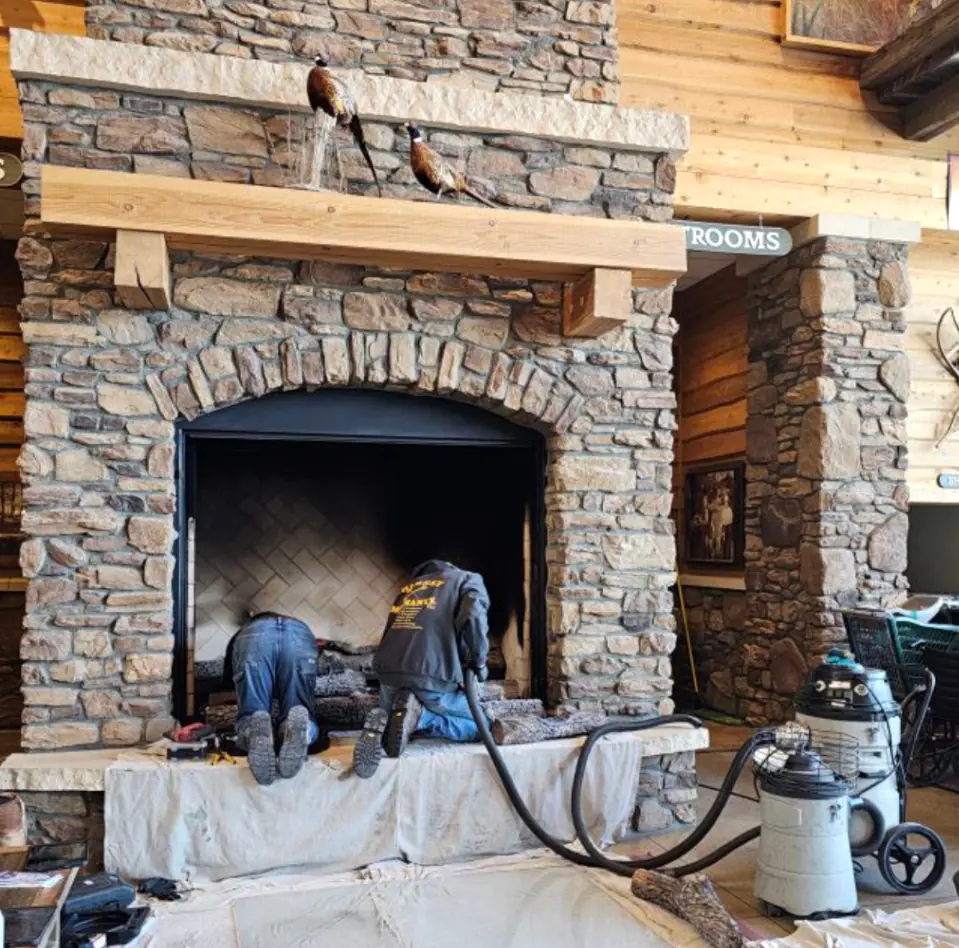
The sweep works upward through the flue from the fireplace or appliance opening, using rods and a brush. This can be useful when roof access is unsafe or difficult; ask how the work area and furnishings will be protected from soot.
From the chimney top
The sweep works down through the flue from above when the top is safely reachable. The chimney cap and opening can be checked during access, but a roof approach does not by itself mean the smoke chamber or firebox has been cleaned.
A method adjusted to the system
A bend, offset, blockage, or fragile flue can affect the route and tools. The sweep should identify those limits and tell you if the flue needs a closer inspection instead of forcing a brush through.
What a Complete Inside-to-Outside Sweep Should Reach
The firebox is only the visible starting point. A complete cleaning considers the path smoke takes from the fireplace or stove up through the chimney.
- Firebox and smoke shelf — The firebox holds the fire, while the smoke shelf sits above the opening and can collect soot and fallen debris. Check that these areas are included rather than assuming brushing the flue clears them.
- Smoke chamber and flue — The smoke chamber funnels smoke into the flue, and the flue carries it outside. CSIA says the smoke chamber belongs in a complete sweeping, not just the firebox and visible lower opening.
- Debris and deposits — Creosote, soot, masonry fragments, nests, or other obstructions may need attention. HomeGuide lists falling creosote or masonry debris, smoke entering the room, downdrafts, and nests or animals in the flue as signs to arrange a sweep.
- The condition of the route — Cleaning does not repair a cracked liner, damaged masonry, or a blocked cap. Ask the sweep to identify anything that prevents a clear path or needs inspection before you use the fireplace again.
Need help now? (720) 780-8924
How a Chimney Sweep Chooses a Route and Cleans the Flue
A professional visit is more than pushing a brush through the opening. The sequence below shows how a sweep can assess access, clean the system, and check the result without asking you to climb onto the roof or work inside the flue.
- Identify the fireplace and chimney — The sweep checks whether the system serves a fireplace, stove, or another appliance and looks for the flue path. This helps establish what must be reached and whether the system has visible damage or a blockage.
- Check access and condition — The sweep assesses the firebox opening and the chimney top before choosing where to work. The check should account for roof access, the cap, and any signs that brushing could damage the flue.
- Protect the work area — Before cleaning, the sweep sets up protection around the fireplace opening and soot-control equipment. Check that the floor and nearby furnishings are covered and that the opening is managed to limit dust.
- Select the brush and rods — Brush size and rod setup should suit the flue rather than be forced through it. The sweep checks that the tools move through the route and do not snag at an offset or obstruction.
- Brush the flue — The sweep works from the selected access point, loosening deposits along the flue. The check is whether the brush has traveled through the intended passage, not just reached the first visible section.
- Clean the smoke chamber and shelf — The sweep addresses soot and debris in these spaces as part of the complete route. Ask whether both were included, since brushing only the flue leaves other collection points untouched.
- Remove and inspect debris — The sweep vacuums loosened debris from the work area and checks for remaining deposits or signs of damage. Falling masonry, persistent blockage, or a glazed creosote coating calls for further evaluation.
- Review what was found — Before lighting another fire, understand whether the flue is clear and whether any damage or repair needs attention. A routine sweep does not replace an inspection when the chimney has changed or may be damaged.
When Debris, Smoke, or Downdrafts Mean It Is Time to Book
Some signs point to deposits or a problem in the venting path, not simply a choice between inside and roof access. Stop using the fireplace and arrange professional attention if smoke enters the room, a downdraft persists, or material falls into the firebox.
- Soot or creosote falls into the firebox — This can mean deposits are accumulating higher in the chimney and breaking loose. Have the full route checked rather than cleaning only the visible firebox.
- Smoke spills into the room — Smoke that enters the room when a fire is lit may indicate a draft problem or a restricted flue. Do not keep burning to see whether it clears; book a sweep to check the passage.
- A downdraft or animal activity appears — A nest, animal, or other obstruction can interfere with venting. Avoid reaching into the chimney or trying to dislodge anything from the roof; have the obstruction assessed.
- You suspect damage or a chimney fire — A fire, major weather event, or suspected flue damage can call for more than routine sweeping. CSIA’s Level 2 inspection guidance describes circumstances where a video scan is required, including after a fire or before relining.
How Long to Set Aside for an Inside or Roof Sweep
HomeGuide’s 2026 guidance says a sweep typically takes one to two hours; a chimney that has not been cleaned in over a year can take about twice as long. The time depends on the system and the amount of work needed, so leave room for the sweep to inspect and clean the full route rather than planning around a quick brush-through.
NFPA 211 calls for chimneys, fireplaces, and vents to be inspected at least once a year for soundness, deposits, and correct clearances, with cleaning or repairs performed when needed. CSIA’s homeowner resources explain the annual inspection guidance and when deposits call for sweeping.
You do not need to decide whether the sweep should start inside or outside before booking. Tell the company what appliance you use, what symptoms you have noticed, and whether you have seen debris or smoke trouble; those details help set the right expectations for access and inspection.
Need help now? (720) 780-8924
Book a Chimney Sweep in Denver Before the Next Fire
Denver Chimney Sweep Pros serves Denver and nearby towns within 60 miles. A sweep is listed from $59, and a free in-home inspection is available; the inspection can help identify whether the issue is deposits, a blockage, or damage that needs separate attention.
The business offers same-day service and is open 24 hours a day, seven days a week. To arrange a visit, call (720) 780-8924 or use the contact form; share the appliance type and any smoke, draft, or debris symptoms so the visit can be planned around the problem.
For a straightforward overview of what the service covers, see the chimney sweep service details. A sweep from inside or outside should leave you knowing what was cleaned and whether anything needs repair or a closer inspection.
Frequently asked questions
Does every chimney need to be swept from the roof?
No. A sweep may work from the fireplace opening or the chimney top, depending on the flue, access, and safe working conditions. Roof access alone does not prove that the full chimney was cleaned.
Can a sweep clean only the part of the chimney I can see?
A complete sweep should address the flue and smoke chamber, not only the firebox opening. Ask which areas were reached, especially if the chimney has an offset or an obstruction.
Should I use the fireplace if smoke comes into the room?
No. Smoke entering the room can signal a draft problem or a restricted flue, so stop using the fireplace and arrange a professional check. Do not try to clear an obstruction from inside the chimney yourself.
What should I tell the sweep when I book?
Describe the fireplace or stove, whether you have seen smoke spill, downdrafts, falling debris, or animal activity, and when the chimney was last cleaned if you know. Those details help the sweep understand the access and inspection needs before arriving.
Book Your Chimney Sweep
Tell us what you have noticed and arrange a visit with Denver Chimney Sweep Pros at (720) 780-8924.