
Chimney Liner Service
Stainless Steel Chimney Liner Installation in Denver, CO
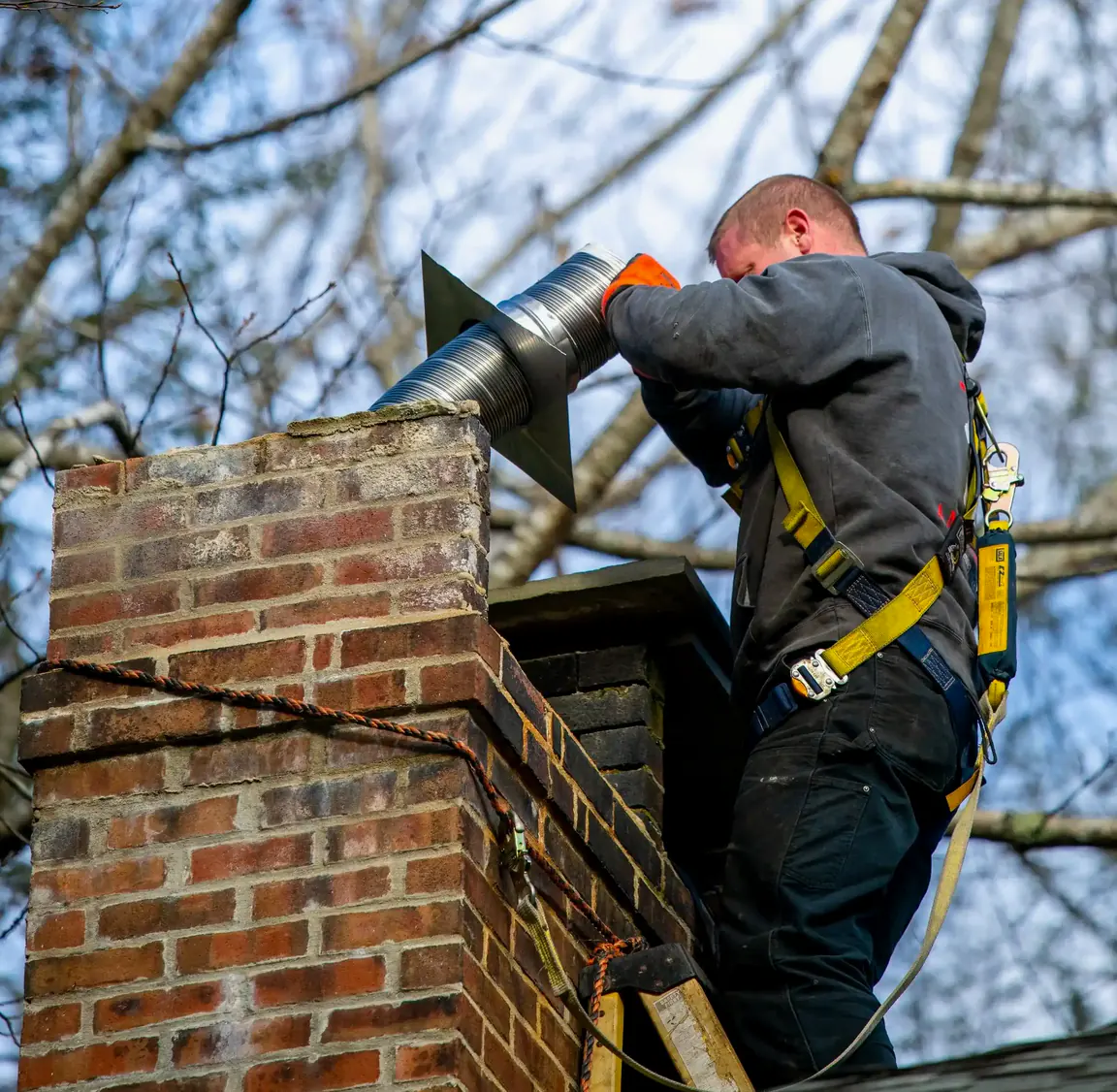
Stainless steel chimney liner installation can address a damaged, missing, or poorly matched flue liner. We inspect the chimney and appliance at your home, then determine what liner work the system needs.
- Free in-home inspections
- Same-day service
- Open 24 hours a day, 7 days a week
- 10-year warranty
Get a fast quote
Why Denver Homeowners Choose Stainless Steel Chimney Liner Installation
A chimney liner forms the passage that carries smoke and combustion gases from an appliance up through the chimney. It also helps separate those gases from the chimney’s surrounding masonry. A cracked, deteriorated, missing, or incompatible liner can make the flue less suitable for the appliance connected to it.
Homeowners often ask about a new liner after noticing smoke problems, damage inside the chimney, or a change to a stove, fireplace, furnace, or water heater. We inspect the flue and consider the connected appliance before identifying the installation work. For an overview of the service, see our chimney liner installation page. Robert (Bob) Anderson, the owner, has 28 years of experience with chimneys.
What Changes the Estimate for a Stainless Steel Chimney Liner
The inspection helps establish what the existing chimney and appliance require. These details affect the scope of a liner installation:
- The appliance and fuel type — A fireplace, wood stove, gas appliance, or oil appliance can have different liner requirements. We identify what the flue serves before selecting an appropriate installation approach.
- Flue dimensions and shape — The liner must suit the existing flue and the connected appliance. The chimney’s height, dimensions, and route affect the amount and type of liner work involved.
- The condition of the chimney — Damage to the flue or surrounding masonry can mean the chimney needs additional repair before or alongside liner work. We check the condition rather than treating every chimney as a simple liner replacement.
- Access and installation needs — The chimney’s layout and access affect the work required to place and connect a liner. A free in-home inspection gives us a chance to assess those conditions before determining the scope.
Need help now? (720) 780-8924
How We Handle Stainless Chimney Liner Installation
A stainless chimney liner installation starts with identifying the appliance and the condition of its flue. We serve Denver and towns within 60 miles, and we travel to your home to assess the chimney.
- Inspect the existing flue — We look for visible deterioration, obstructions, and conditions that could affect the new liner. If you are also considering a gas furnace and water heater flue liner, the connected appliances help determine what the chimney needs.
- Match the liner to the appliance — We identify the appliance and fuel type, then assess the flue dimensions and route. That information matters because a liner must be suitable for the system it serves, not just the chimney opening.
- Check whether insulation is required — The Chimney Safety Institute of America (CSIA) says liners serving solid-fuel appliances need insulation. For gas or oil, CSIA says insulation is not required to meet manufacturer installation and warranty requirements.
- Install the liner for the chimney’s layout — The installation work accounts for the flue’s path and the appliance connection. Any existing chimney damage that affects the work needs to be considered as part of the installation scope.
- Set a visit around the work involved — HomeGuide gives 4 to 8 hours as a typical liner installation duration. The actual time can vary with chimney access, the installation conditions, and any related repairs; we assess those details during the in-home inspection.
Signs Your Chimney May Need a New Stainless Steel Liner
These symptoms can point to a liner or flue issue, but they do not confirm the cause on their own. An inspection can help distinguish liner damage from other chimney or appliance problems.
Smoke enters the room
Smoke spilling into the living space can indicate a draft or venting problem. A blocked or damaged flue is one possible cause, so note when the smoke appears and which appliance is in use.
You find fragments or debris in the firebox
Pieces of masonry or flue material may signal deterioration inside the chimney. Avoid disturbing debris deep in the flue and arrange an inspection to identify where it came from.
The chimney shows signs of moisture damage
Dampness, staining, or deteriorating material can affect chimney components, including the flue. The inspection should check both the liner and the surrounding structure.
You have changed the appliance connected to the chimney
A new appliance can have different venting needs from the one previously served by the flue. Have the liner evaluated before relying on the existing setup for the replacement appliance.
Need help now? (720) 780-8924
Frequently asked questions
Can a stainless steel chimney liner be repaired, or does it need replacement?
It depends on the liner’s condition and the extent of the damage. An inspection can identify whether a repair is suitable or whether replacing the liner is the better way to address the problem.
What does it cost to start a stainless steel chimney liner installation?
The in-home inspection is free, so there is no charge for that first assessment. The installation scope depends on the appliance, flue dimensions, chimney condition, and access.
Is it safe to keep using my fireplace if the chimney liner may be damaged?
Smoke entering the room, visible flue debris, or suspected liner damage are reasons to stop using the fireplace until the chimney is inspected. These signs can have different causes, and an inspection can determine whether the liner or another part of the venting system is involved.
How long does stainless steel chimney liner installation take?
HomeGuide lists 4 to 8 hours as a typical installation duration. The time for a particular visit depends on the chimney’s access and condition, as well as any related work needed.
Schedule a Chimney Liner Inspection
Call (720) 780-8924 or request service to arrange a free in-home inspection for your Denver chimney.