
Chimney Sweep vs. Chimney Cleaning: What Is the Difference?
The answer to “What is the difference between a chimney sweep and a chimney cleaning?” is that a sweep is the professional, while cleaning is the work of removing deposits and debris. A professional sweep can evaluate the system as well as clean it.
Need help now? (720) 780-8924
What Is the Difference Between a Chimney Sweep and Chimney Cleaning?
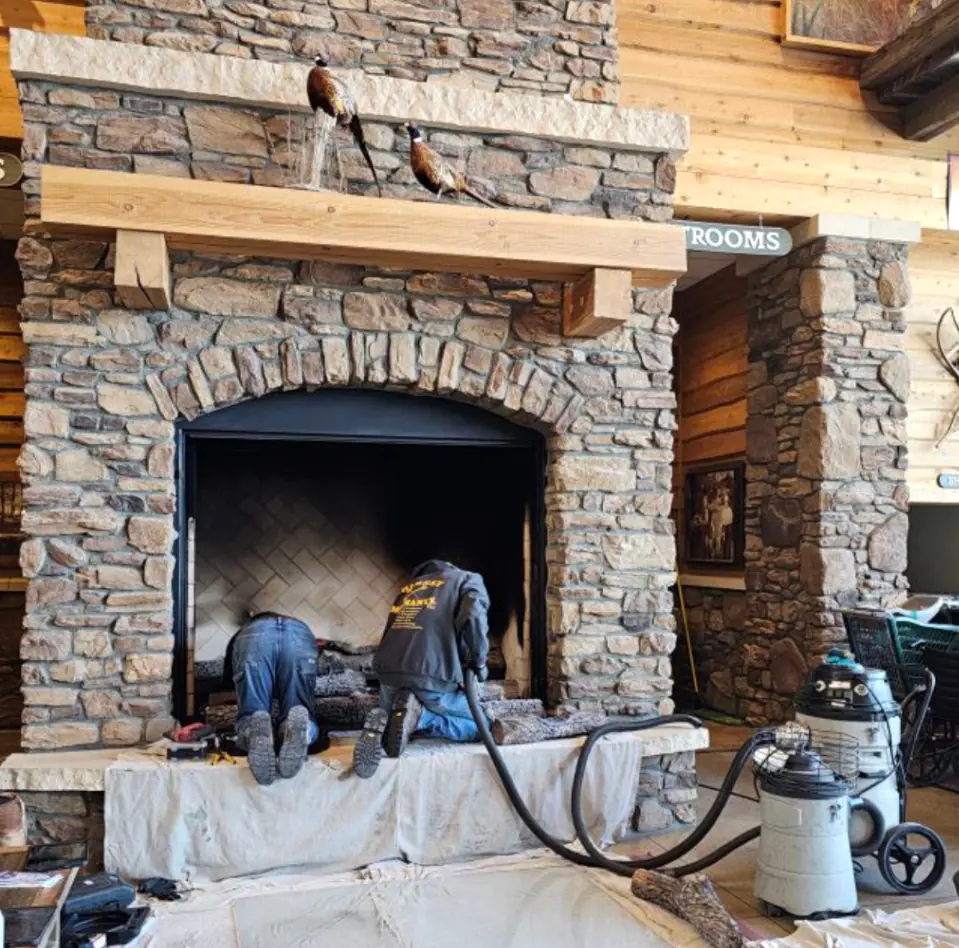
A chimney sweep is the person or professional service; chimney cleaning is the removal of soot, creosote and other deposits from the flue and connected areas. People often use the terms interchangeably because a sweep appointment may include cleaning, but the words describe different parts of the job.
Cleaning addresses material inside the chimney. A full sweep appointment can also include a system evaluation, which helps identify damage, obstructions or clearance concerns that brushing alone would not reveal. The Chimney Safety Institute of America (CSIA) describes mechanical brushing with a full system evaluation as the best way to clean a chimney.
A chimney inspection is a related but distinct service: it assesses the system’s condition. Cleaning is needed when deposits or debris call for removal; an inspection can identify that need. See our chimney cleaning service for details about booking.
How a Sweep, Cleaning and Inspection Differ
Chimney sweep
This usually refers to the professional or the appointment. Ask whether the visit includes an evaluation as well as cleaning, since the brush work alone does not assess the full system.
Chimney cleaning
This is the removal of soot, creosote and debris. It is the right focus when deposits need to come out, but cleaning does not repair a cracked flue tile or damaged masonry.
Chimney inspection
This checks soundness, deposits and proper clearances. NFPA 211 calls for chimneys, fireplaces and vents to be inspected at least once a year, with cleaning or repairs performed when needed.
Which Chimney Service Fits the Problem You See?
Use the visible symptom to decide what to request, but do not treat a symptom as a diagnosis. A sweep can assess whether the issue calls for cleaning, an inspection or a repair.
- You see soot or creosote buildup — Ask about a sweep and cleaning. Creosote can be flaky, sticky like tar or shiny and hardened; the appearance helps show why a quick look from the fireplace opening may not be enough.
- Smoke enters the room — Request an inspection rather than assuming that cleaning alone will fix it. A blockage or another condition in the venting system can affect how smoke moves.
- You see damage or water entry — Ask for an inspection of the affected chimney parts. Cleaning removes deposits; it does not correct a leak, cracked tile, damaged crown or other structural problem.
- You have a gas fireplace — Do not assume the chimney needs no attention because the appliance burns gas. CSIA recommends annual inspection of gas-heated chimneys because nests, debris and corrosion can obstruct or damage a flue.
- Nothing seems wrong — Keep the annual inspection on your calendar. NFPA 211’s inspection rule is about checking condition, deposits and clearances—not automatically cleaning every chimney every year.
Need help now? (720) 780-8924
What Happens During a Professional Chimney Cleaning?
The exact procedure depends on the appliance and chimney, but a careful professional process uses the system’s condition to guide the work. CSIA’s guidance emphasizes mechanical brushing and a full system evaluation.
- Identify the appliance and flue — The sweep establishes which fireplace or stove connects to the chimney and checks the accessible firebox and flue opening. Confirming the system helps prevent work on the wrong vent or appliance.
- Look for visible obstructions or damage — The sweep checks accessible areas for debris and signs of deterioration before choosing a cleaning approach. A blockage or damaged part may call for further inspection instead of brushing alone.
- Assess the deposits — Soot and creosote can have different textures, from loose flakes to a hard glaze. CSIA notes that hard glaze may require chemical treatment or rotary tools before it can be removed mechanically.
- Brush the flue mechanically — A suitable chimney brush works against deposits along the flue. The condition of the lining and the type of buildup determine what approach is appropriate; chemical products alone are not a substitute for sweeping.
- Check connected areas where deposits collect — The smoke shelf, baffle and offsets can hold material that does not fall straight down the flue. CSIA notes that debris must still be removed from these areas when chemical creosote products are used.
- Evaluate the system condition — The professional checks for concerns such as visible damage, remaining deposits or a possible obstruction. If a more detailed evaluation is warranted, ask what area needs further inspection and why.
- Review the result and next action — Ask whether cleaning removed the deposits and whether the inspection found a condition that needs repair or a closer look. Keep the findings so you can distinguish completed cleaning from any recommended follow-up.
Why Chimney Cleaning Alone May Not Solve the Problem
Brushing removes deposits, but it cannot correct a cracked flue tile, damaged masonry, a leak or a faulty damper. A chimney may look cleaner while still needing repair, which is why a system evaluation matters alongside mechanical cleaning.
Creosote buildup also changes over time. CSIA explains that smoke condensing in a cooler flue forms creosote, and restricted air, unseasoned wood and low flue temperatures can speed its formation. If you see a hard, shiny glaze, do not assume a basic brushing will remove it.
Do not rely on chemical creosote products as a replacement for mechanical sweeping and inspection. CSIA says deposits and debris can remain in the smoke shelf, baffle and offsets even after those products are used. Have a chimney sweep assess persistent buildup or an unexplained smoke problem.
How Long a Chimney Sweep Visit Takes and When to Book
There is no single visit length that fits every chimney. HomeGuide notes that heavier buildup, frequent use, steep or hard-to-reach roofs and extra flues can add time; the appliance and the work required also affect the scope. For more on timing, read how long a chimney sweep takes.
Fall is the busy season for chimney work, so booking within days is easier when you plan before the rush. Denver Chimney Sweep Pros serves Denver and towns within 60 miles, and the team travels to the customer. You can contact us to book or call (720) 780-8924.
Need help now? (720) 780-8924
A Clean Denver Chimney Does Not Change Action Day Rules
Cleaning your chimney does not by itself make a wood-burning appliance legal to use on a restricted day. From November through March, indoor burning restrictions apply on Action Days in Denver and several nearby counties, subject to specific device exemptions. Denver also prohibits operating a solid-fuel-fired device on a high-pollution day unless it is approved by Denver or the state health department.
Check the Colorado Department of Public Health and Environment’s indoor-burning guidance before lighting a fire on a restricted day. The state posts the Denver-area air forecast daily at 4 p.m.; follow the current guidance for your appliance rather than treating a recent cleaning as an exemption.
Frequently asked questions
How much does professional chimney cleaning cost?
Denver Chimney Sweep Pros lists chimney cleaning from $59. The final work depends on the chimney’s condition and scope, so ask what the quoted cleaning covers before booking.
Does a chimney cleaning include an inspection?
Cleaning and inspection are different tasks: cleaning removes deposits, while an inspection checks soundness, deposits and clearances. NFPA 211 calls for an inspection at least once a year, with cleaning or repairs done when needed.
Can a chemical creosote remover replace a chimney sweep?
No. CSIA says chemical products are not a substitute for mechanical sweeping and an annual inspection, because debris may remain on the smoke shelf, baffle or offsets.
Should I have a gas fireplace chimney inspected too?
Yes. CSIA recommends annual inspection of gas-heated chimneys because nests, debris and corrosion from modern high-efficiency appliances can obstruct or damage the flue.
Book Chimney Cleaning in Denver
Choose a time for a chimney cleaning or inspection by calling (720) 780-8924 or using our contact page.