
How Long Does a Chimney Sweep Take?
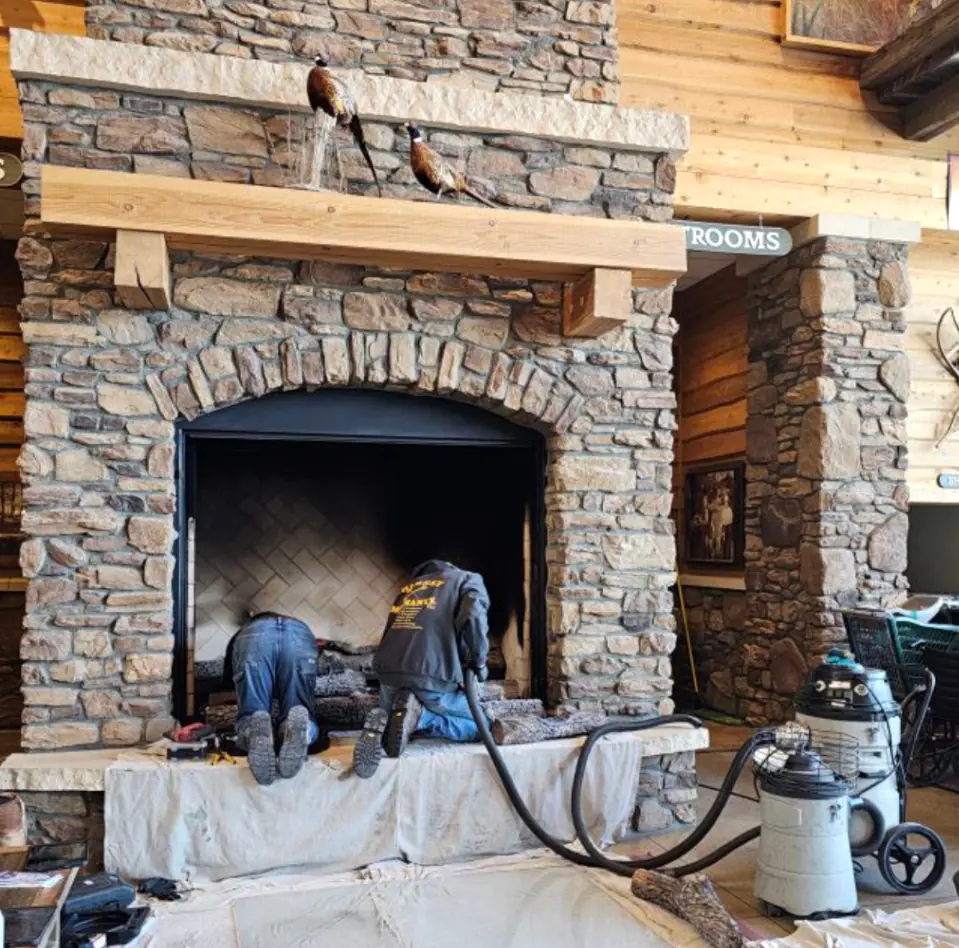
A chimney sweep takes as long as needed to inspect and mechanically clean the flue; buildup, extra flues, difficult roof access, or hard glaze can extend the visit. Our free in-home inspection helps identify the work before cleaning.
Need help now? (720) 780-8924
How Long Does a Chimney Sweep Take for Your Fireplace?
There is no single visit length that fits every chimney. A clear, accessible flue with light deposits calls for less work than one with heavy buildup, several flues, a steep or hard-to-reach roof, or hardened creosote. HomeGuide’s 2026 chimney cost guide also identifies heavier buildup, extra flues, and difficult roof access as factors that add work.
The cleaning method matters, too. The Chimney Safety Institute of America (CSIA) says mechanical brushing with a full system evaluation is the best way to clean a chimney; hard, glazed creosote may need chemical treatment or rotary tools before brushing. That added work can make the visit longer than a routine sweep.
Which Chimney Conditions Can Extend a Cleaning Visit?
Light soot in one accessible flue
A straightforward flue with modest deposits typically requires fewer cleaning steps than a heavily used or blocked system. The sweep still needs to check the appliance connection and flue rather than judging the job by the firebox alone.
Heavy or glazed creosote
Creosote can be flaky, sticky and tar-like, or shiny and hardened. CSIA notes that hard glaze may require treatment or rotary tools before mechanical brushing, so ask what the deposit looks like and what removal method is appropriate.
Multiple flues or difficult roof access
Each additional flue needs attention, and a steep or hard-to-reach roof can add setup and access work. Tell the sweep how many fireplaces or appliances vent into the chimney and mention any roof-access concern when booking.
What Happens During a Chimney Sweep, Step by Step?
A thorough cleaning involves more than putting a brush into the flue. CSIA recommends mechanical brushing with a full system evaluation; these steps show the main parts a professional may check and clean.
- Identify the fireplace and flue — The sweep checks which appliance connects to the chimney and whether there is more than one flue. Share any recent appliance change, unusual smoke, or prior chimney trouble before work begins.
- Look over the firebox and damper — The firebox and damper help reveal visible soot, debris, or a damper that does not open and close freely. Report any smoke that has entered the room; it can point to a drafting or blockage issue that needs attention.
- Inspect the flue — A flashlight can show deposits and visible damage from the accessible areas. Ask whether the flue has glazed creosote or another condition that could change the cleaning method.
- Protect the work area — Before brushing, the sweep should manage the opening and nearby area to contain soot. Check that the fireplace opening and surrounding furnishings are clear enough to work safely.
- Brush the chimney mechanically — A chimney brush and rods are used to loosen deposits from the flue walls. The brush must suit the flue and its lining; ask what the sweep found if brushing alone is not appropriate.
- Address deposits and debris — The smoke shelf, offsets, and other hard-to-reach areas can hold debris after the main flue is brushed. CSIA warns that chemical creosote products do not replace mechanical sweeping because debris still needs removal from those areas.
- Review the result and next step — The sweep should identify any remaining buildup, visible damage, or need for a closer inspection. CSIA says a Level 2 inspection includes a video scan and is recommended after a chimney fire, before a sale, or when relining.
Need help now? (720) 780-8924
What Should You Tell a Chimney Sweep Before Booking?
A few details help the sweep understand the setup and what may affect the visit. Have these points ready when you arrange chimney cleaning service.
- Appliance type — Say whether the chimney serves a wood-burning fireplace, a gas fireplace, or another appliance. Different systems can have different deposits and inspection needs.
- Number of fireplaces or flues — Mention each appliance that vents through the chimney and whether you know of multiple flues. More than one flue can add work.
- Use and symptoms — Describe how often you burn and whether you have noticed smoke entering the room, a persistent odor, or visible deposits. These details help the sweep decide what to check first.
- Access or recent changes — Share any roof-access concern and any recent appliance change, chimney repair, or chimney event. A change to the appliance or a past fire can call for more than routine cleaning.
When Is an Inspection or Repair More Than a Routine Sweep?
A sweep removes deposits; an inspection evaluates the chimney’s condition. CSIA’s homeowner guidance quotes NFPA 211’s recommendation to inspect chimneys, fireplaces, and vents at least once a year for soundness, deposits, and correct clearances, with cleaning or repairs done if needed. The inspection can identify work that brushing alone cannot address.
A visible crack, loose masonry, damaged liner, or evidence of a past chimney fire calls for an evaluation before you resume use. For a masonry fireplace, CSIA recommends sweeping at 1/8 inch of sooty buildup, or sooner if any glaze is present; factory-built fireplaces should be swept when any appreciable buildup appears. You can read more about the difference between a chimney sweep and chimney cleaning.
When Should Denver Homeowners Book a Chimney Sweep?
Fall is the busy season for chimney service, so booking within days of noticing buildup or a concern can help you get the system checked before regular fireside use. Waiting until the first cold evening can leave less room to schedule the work around your plans.
Denver Chimney Sweep Pros serves Denver and towns within 60 miles, and we go to the customer. We offer same-day service; for an appointment, call (720) 780-8924 or use our contact page.
Need help now? (720) 780-8924
What Should You Do When Smoke or Heavy Creosote Raises Concern?
A strong smoky odor, smoke entering the room, or shiny, hardened deposits are reasons to stop using the fireplace until the chimney has been evaluated. Creosote forms as smoke condenses in a cooler chimney; restricted air, unseasoned wood, and cool flue temperatures can speed its formation, according to CSIA’s guidance on preventing chimney fires.
Do not try to remove hardened deposits with a household brush or treat a chemical product as a substitute for sweeping. A professional can inspect the system, identify whether mechanical cleaning is suitable, and flag damage or a blockage that needs repair. For routine or concern-driven work, book our chimney cleaning service.
Frequently asked questions
Does a chimney take longer to sweep if it has not been cleaned for years?
It can, because heavier deposits may take more work to remove than light soot. The sweep should check whether creosote is flaky or hardened and choose a cleaning method suited to what is present.
Will a chimney sweep take longer if I have more than one fireplace?
It may, especially if the fireplaces connect to separate flues that each need evaluation and cleaning. Tell the sweep how many appliances you have and which ones you use.
Should I book a sweep before fall?
Fall is the busy season for chimney service, so booking before you plan to use the fireplace gives you more time to arrange a visit. If you already see heavy buildup or have a smoke problem, arrange an evaluation rather than waiting for the season.
Can I use my fireplace while waiting for a sweep?
Avoid using it if smoke enters the room, you see shiny hardened creosote, or you suspect damage or a blockage. Have the chimney evaluated before burning again so the issue can be identified.
Ready to Schedule Chimney Cleaning?
Call (720) 780-8924 or contact us to arrange a chimney cleaning visit.