
How Much Does Chimney Repair Cost?
Chimney repair starts at $49 with us; HomeGuide’s 2026 typical U.S. ranges are $200–$850 for minor repairs, $500–$7,000 for extensive repairs, and $4,000–$15,000 for a rebuild. The condition and repair type determine which scope applies.
Our Starting Prices in Denver
| Service | Price |
|---|---|
| Chimney Sweep | from $59 |
| Chimney Repair | from $49 |
| Chimney Inspection | free in-home inspection |
| Chimney Cleaning | from $59 |
Need help now? (720) 780-8924
What the Chimney Repair Cost Ranges Tell You
The HomeGuide figures are typical U.S. market ranges, not our prices. Our listed starting price for chimney repair is from $49; the final scope depends on what the inspection finds and which parts need repair.
A cap or crown repair is different work from repairing a liner or rebuilding a chimney. An estimate should identify the damaged component and the proposed repair, rather than treating every visible crack or leak as the same job.
Which Chimney Repair Fits the Damaged Part?
The part that has failed helps distinguish a focused repair from work that affects the chimney’s structure or flue. Compare the inspection findings with the repair being proposed.
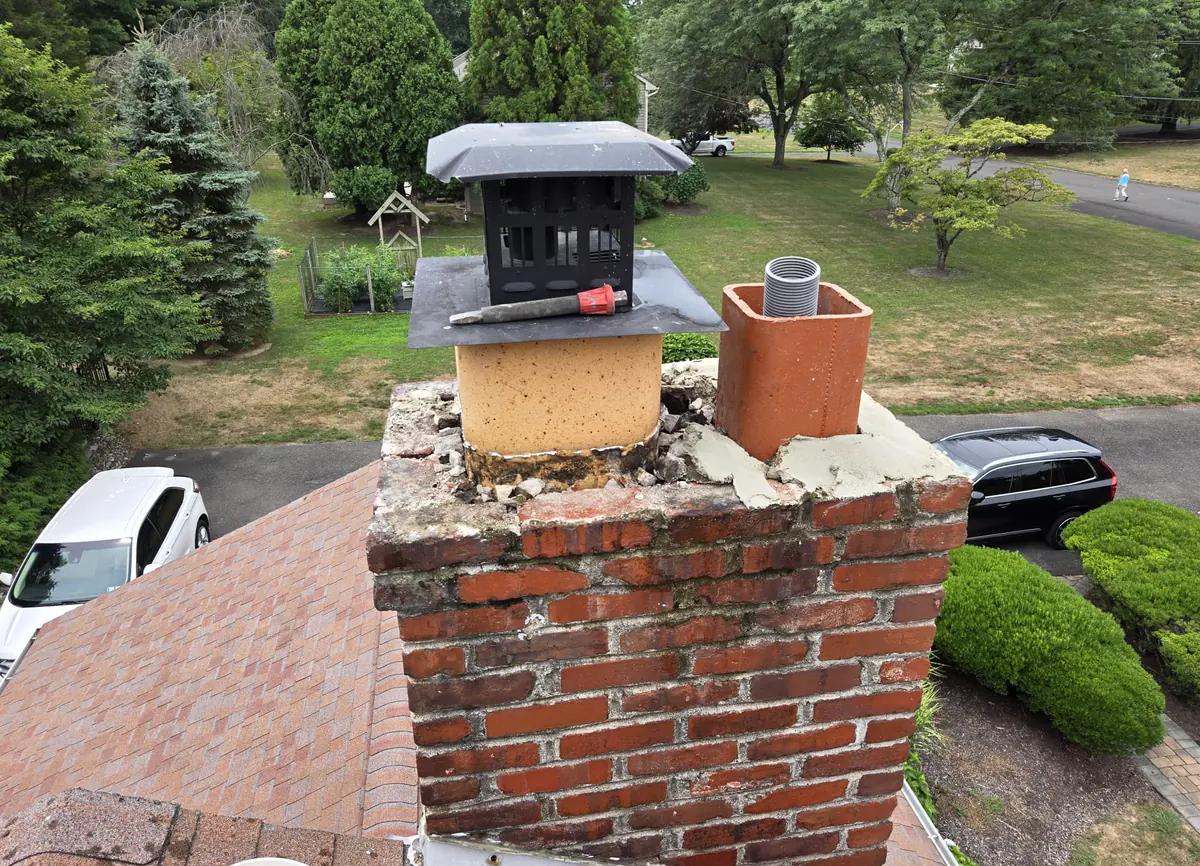
Cap or crown repair
A damaged cap or crown calls for attention to the chimney top. Ask the inspector to identify which part is damaged and whether the proposed work is limited to that component. See how much chimney crown repair costs for details on that specific repair.
Liner repair or replacement
Flue damage may call for liner work rather than a surface repair to the masonry. Ask what the inspection found inside the flue and whether a video scan is needed; the chimney liner installation cost guide covers that separate scope.
Masonry repair or rebuild
When damage affects a larger portion of the chimney, the repair may extend beyond one component. The estimate should state whether it covers localized masonry work or a rebuild, and which parts will remain in place.
Which Chimney Damage Signs Call for an Inspection?
Some warning signs point to a problem that should be assessed before you use the fireplace again. HomeGuide identifies smoke backing up into the home and fire damage that has weakened the chimney structure as signs of possible repair needs.
- Smoke backs up into the room — Stop using the fireplace and arrange an inspection. Smoke entering the home can signal a venting problem that needs attention before the next fire.
- A chimney fire has occurred — Do not assume the chimney is sound because flames or smoke are no longer visible. Heat can damage internal flue parts as well as masonry.
- You suspect damage inside the flue — A visible view from the fireplace may not show the full condition of the flue. Ask whether a closer inspection or video scan is appropriate for the concern.
- The estimate names a repair without identifying the part — Ask which component is damaged and what finding supports the repair. A clear scope makes it easier to compare the proposed work with the inspection results.
Need help now? (720) 780-8924
How to Move From a Chimney Problem to a Repair Plan
You can gather useful information without climbing onto the roof or taking apart the fireplace. Leave chimney access and repair work to a professional.
- Stop using a smoky or fire-damaged fireplace — If smoke comes into the room or you know a chimney fire occurred, do not light another fire while you wait for an inspection. Check that everyone is away from the affected area and note what you observed.
- Record what you can see safely — Write down when the smoke or damage appeared and take photos from the ground or inside the room. Check that the pictures show the location clearly; do not climb onto the roof to get a closer view.
- Request an in-home inspection — Describe the fireplace, the sign of damage, and any recent chimney fire when booking. Our in-home inspection is free, and the findings help identify whether the issue involves the cap, crown, liner, masonry, or another part.
- Ask whether a video scan is needed — A Level 2 inspection includes a video scan. CSIA recommends this level after a chimney fire and in other situations such as relining; review the CSIA Level 2 inspection guidance for the procedure.
- Match the written findings to the proposed work — Check that the estimate names the affected part and states the repair scope. If it recommends a liner, masonry repair, or rebuild, ask which inspection finding supports that specific work.
- Confirm the repair before booking it — Compare the proposed work with the inspection findings and confirm that the estimate addresses the problem you reported. Then book the repair service for the identified scope.
Three Chimney Problems and the Starting Prices to Compare
For damage that calls for chimney repair, our prices start from $49. That is a starting price, not a promise that every repair will cost the same; the inspection findings and repair scope establish what work is needed.
For suspected damage after a fire or smoke backing up into the home, start with our free in-home inspection so the damaged component can be identified. If the finding is soot buildup without a repair issue, chimney cleaning starts from $59; cleaning and repair address different problems.
Why a Chimney Fire Can Change the Repair Scope
A chimney fire does not always mean the entire chimney needs rebuilding, but the damage should be inspected before the fireplace is used again. CSIA explains that the repair may range from replacing a few flue tiles to installing a new liner system or rebuilding the chimney, depending on the damage.
A fire can affect areas that are not visible from the hearth. Read CSIA’s chimney fire guidance, then arrange an inspection to determine what is damaged. Our chimney repair service addresses the repair after the affected parts are identified.
Need help now? (720) 780-8924
How to Tell Chimney Repair Apart From Chimney Cleaning
Cleaning removes soot and creosote deposits; repair addresses a damaged or failing chimney component. The two can be needed at the same time, but one does not replace the other. CSIA notes that creosote can appear flaky, sticky and tar-like, or shiny and hardened, so its appearance is not a substitute for an inspection.
If the concern is buildup, ask for a cleaning assessment. If you see smoke backing up, suspect a damaged flue, or have had a chimney fire, ask for an inspection of the chimney’s condition before deciding that cleaning alone is enough.
How Denver Homeowners Can Book Chimney Repair
We go to your home in Denver for chimney service. To book, call (720) 780-8924 or use our contact page; we are open 24 hours a day, 7 days a week, and our typical arrival time is 30 minutes.
When you book, describe the sign you noticed and whether there has been a chimney fire. That gives the visit a clear starting point: inspect the reported concern, identify the affected part, and determine whether cleaning or repair is the appropriate next step.
Frequently asked questions
Does homeowners insurance cover chimney repair?
Coverage depends on your policy and the cause of the damage. Photograph what you can safely see and ask your insurer what documentation it needs before approving work.
Can I use my fireplace if smoke comes back into the room?
Stop using it until the chimney and venting are inspected. Smoke backing up into the home is a warning sign, not something to solve by starting another fire.
Does a chimney fire always mean the chimney needs to be rebuilt?
No. CSIA says post-fire repairs can range from replacing a few flue tiles to a new liner system or a full rebuild, depending on the damage. An inspection is needed to identify the affected parts.
How do I know whether I need chimney repair or just cleaning?
Cleaning removes deposits, while repair addresses damage to a chimney component. Smoke backing up, suspected flue damage, or a past chimney fire calls for an inspection before you decide that cleaning alone is enough.
Get the Chimney Checked
Describe the damage and book an in-home inspection to identify the repair scope.