
How Much Does a Chimney Sweep Cost in Colorado?
Our chimney sweep starts at $59; HomeGuide reported a typical U.S. cost of $150–$375 for a one-flue masonry wood-burning chimney in 2026.
Our Starting Prices in Denver
| Service | Price |
|---|---|
| Chimney Sweep | from $59 |
| Chimney Repair | from $49 |
| Chimney Inspection | free in-home inspection |
| Chimney Cleaning | from $59 |
Need help now? (720) 780-8924
How Much Does a Chimney Sweep Cost in Colorado Compared With U.S. Averages?
The national range is a comparison point, not a quote for every fireplace. HomeGuide’s 2026 figure describes a masonry wood-burning chimney with one flue; your chimney’s setup and the work it needs may differ.
A sweep and a repair are separate kinds of work: sweeping removes deposits, while repair addresses damage or a faulty component. Review our prices to compare the available starting prices, and use the estimate for your chimney’s actual scope rather than treating a national average as a local bill.
A complete sweep is not just brushing the visible firebox. CSIA says it covers the flue and smoke chamber, too; its homeowner resources explain why these areas matter.
Which Chimney Service Fits Your Situation and Starting Price?
Start by matching the problem to the work, rather than assuming every chimney visit is a cleaning. These situations show where our listed starting prices apply; an inspection can help identify whether cleaning or repair is needed.
- Routine soot or creosote buildup — Choose a chimney sweep when the flue needs routine deposit removal. Our chimney sweep starts at $59; the final scope depends on what the chimney needs.
- You need the chimney’s condition checked — Request an inspection when you are unsure whether the issue is deposits or damage. We offer a free in-home inspection, which helps establish what work should happen next.
- You can see damage or suspect a defect — A repair may be the right category if masonry or another chimney component needs work. Chimney repair starts at $49; have the condition assessed before treating a cleaning as a fix.
How Are a Chimney Sweep, Inspection, and Repair Different?
The names describe different jobs, so the lowest starting price may not match the problem you are trying to solve. Use this comparison to decide what to request.
Chimney sweep
A sweep removes soot and creosote deposits from the chimney. It suits routine maintenance or visible buildup, but it does not by itself correct cracked masonry or a damaged component.
Chimney inspection
An inspection checks the chimney’s condition and helps identify deposits, damage, or other concerns. Ask for one when smoke enters the room, debris falls into the firebox, or you are unsure what service is needed.
Chimney repair
Repair addresses a defect rather than removing routine deposits. The specific repair should follow an assessment of the affected part, so do not assume a sweep includes repair work.
Need help now? (720) 780-8924
What Happens During a Typical Chimney Sweep?
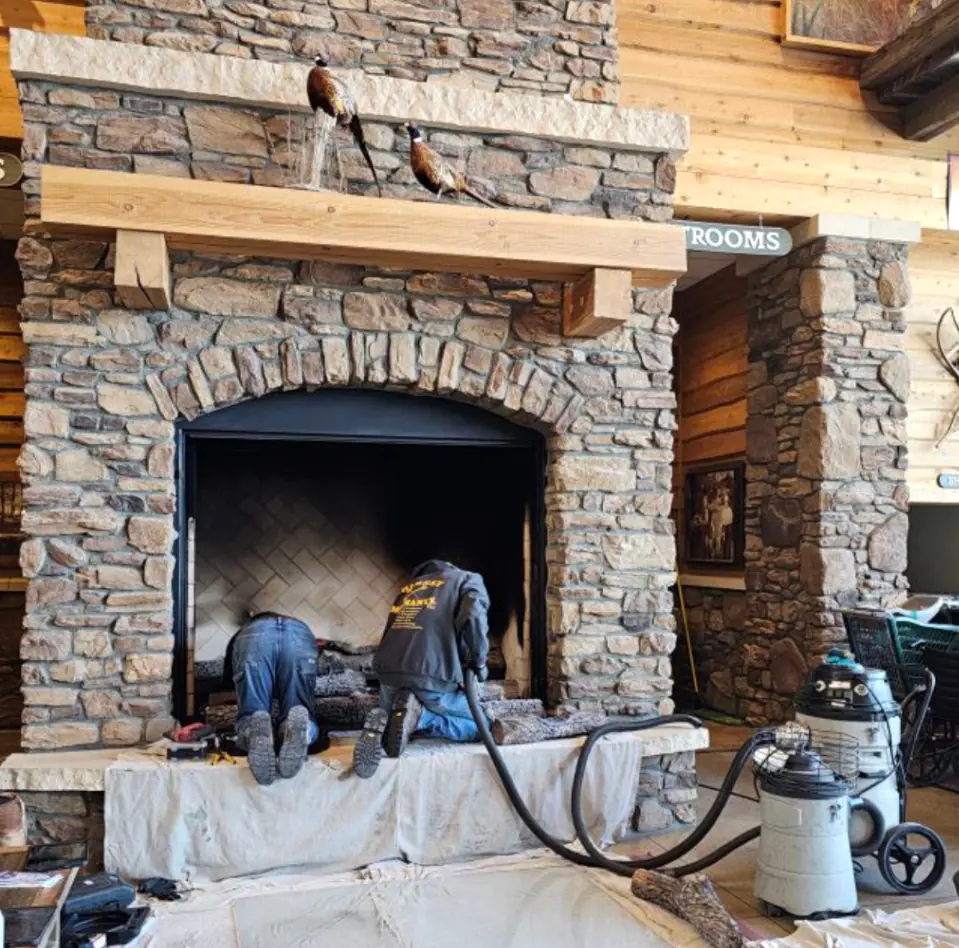
A typical professional sweep cleans the firebox, smoke shelf, and flue, then vacuums debris, according to HomeGuide (2026). The exact work depends on the fireplace and chimney; the steps below show how those parts fit together.
- Identify the fireplace and concern — The sweep starts by establishing what appliance and chimney are being serviced and what you have noticed. This helps direct attention to the right flue and visible problem.
- Check the firebox — The firebox is examined for soot, creosote, and masonry debris. Falling material can point to deposits or deterioration farther up the chimney.
- Look at the smoke shelf — The smoke shelf sits behind the firebox and can collect debris that is easy to miss from the room. A complete cleaning accounts for this area as well as the firebox.
- Brush the flue — A chimney brush mechanically loosens deposits along the flue. CSIA advises that chemical creosote products are not a substitute for mechanical sweeping because debris still needs to be removed.
- Include the smoke chamber — The smoke chamber is part of a complete sweep, not an optional substitute for cleaning the flue. CSIA’s guidance distinguishes full chimney sweeping from cleaning only the firebox.
- Vacuum the loosened debris — A vacuum removes loosened soot and debris from the work area. Check that the firebox and surrounding area are left clear before the fireplace is used again.
- Note what needs attention — Cleaning removes deposits; it does not repair a crack or other defect. Any concern found during the visit calls for an appropriate assessment before you rely on the fireplace.
How Long Should You Set Aside for a Chimney Sweep?
HomeGuide (2026) says a sweep usually takes one to two hours. A chimney that has not been cleaned in more than a year may take about twice as long, so allow extra time if maintenance has been delayed.
The time reflects more than brushing the firebox: the flue and smoke shelf also need attention, and a complete sweep includes the smoke chamber. Tell us when the chimney was last cleaned and what you have observed when arranging the visit; that context helps identify the likely scope.
Which Chimney Signs Mean You Should Arrange a Sweep or Inspection?
Do not wait for heavy buildup to become obvious from the room. HomeGuide (2026) identifies several signs that call for professional attention:
- Creosote or masonry debris in the firebox — Material falling into the firebox may have come from the flue or chimney structure. Arrange an assessment to determine whether the issue calls for cleaning, repair, or both.
- Smoke entering the room — Smoke that spills indoors when you light a fire is a sign to stop using the fireplace until the cause is checked. A sweep or inspection can assess the chimney rather than treating the smoke as a cleaning problem by default.
- Downdrafts, nests, or animals in the flue — Air moving down the chimney or evidence of an animal can indicate a blockage or obstruction. Contact a chimney sweep instead of reaching into the flue or trying to remove an animal yourself.
Need help now? (720) 780-8924
What Colorado Action Day Rules Should Fireplace Owners Check?
From November through March, indoor burning restrictions apply on Action Days in Denver, Boulder, Broomfield, Douglas, and Jefferson counties, as well as parts of Adams and Arapahoe counties west of Kiowa Creek. The Colorado Department of Public Health and Environment explains the locations and device exemptions in its indoor-burning guidance.
Before burning on a winter day, check whether an Action Day has been called and whether your device qualifies for an exemption. A masonry fireplace is allowed on an Action Day only with qualifying equipment—such as gas logs, an EPA Phase III insert, an approved pellet insert, or an electric device—and when local rules allow it. A chimney sweep does not replace checking the day’s restrictions.
How Can You Book a Colorado Chimney Sweep?
Fall is the busy season, so arrange your visit within the next few days if you want the chimney checked before regular use. When you book, share whether you have a wood-burning fireplace, when it was last cleaned, and whether you have noticed smoke, debris, or a downdraft.
We are open 24/7 and offer same-day service. Call (720) 780-8924 or contact us online to request a visit; you can also review our chimney sweep service before booking.
Frequently asked questions
How much should you pay for a chimney sweep?
HomeGuide reported a typical U.S. range of $150–$375 in 2026 for a one-flue masonry wood-burning chimney. That figure is a market comparison, not a universal quote; check what areas the cleaning covers and whether the work is sweeping, inspection, or repair.
How much does it cost to clean a wood-burning chimney?
The typical U.S. range reported by HomeGuide in 2026 is $150–$375 for a masonry wood-burning chimney with one flue. A different chimney type or scope may not match that comparison, so confirm what the visit covers.
How long does a professional chimney sweep take?
HomeGuide (2026) gives a usual duration of one to two hours. A chimney that has gone more than a year without cleaning may take about twice as long.
What should I do if smoke comes into the room when I light a fire?
Stop using the fireplace until the cause has been checked. Smoke entering the room is a known sign that the chimney may need sweeping or inspection, and the right next step depends on what the assessment finds.
Book Your Chimney Sweep
Call (720) 780-8924 or contact us to request a chimney sweep or inspection.