
How Often Should You Have a Chimney Sweep Come?
How often should a chimney sweep come? Schedule an inspection at least once a year, then sweep based on the buildup and appliance type. The annual check does not always mean an automatic cleaning: masonry and factory-built fireplaces have different sweeping thresholds.
Need help now? (720) 780-8924
How Often Should a Chimney Sweep Come?
Have your chimney inspected at least once a year. NFPA 211 recommends an annual inspection for chimneys, fireplaces, and vents to check their condition, deposits, and clearances; the inspection determines whether sweeping or repairs are needed. The Chimney Safety Institute of America’s homeowner guidance explains this annual standard.
Sweeping frequency depends on the fireplace and what the inspection finds, not just the calendar. For a masonry fireplace, CSIA recommends sweeping when soot reaches 1/8 inch or sooner if any glazed creosote is present. A factory-built fireplace should be swept when there is appreciable buildup.
Regular wood burning can create deposits, especially when the fire has restricted air, the wood is unseasoned, or the flue stays cool. Because these conditions affect how quickly creosote forms, a yearly check is more reliable than assuming the chimney is clean because you have used it only a few times.
Does an Annual Chimney Inspection Mean an Annual Sweep?
An inspection checks the chimney’s condition; sweeping removes deposits and debris when cleaning is needed. Keep the two decisions separate so you do not confuse a yearly safety check with a fixed cleaning interval.
Annual inspection
Use this schedule for wood-burning and gas-heated chimneys, even when you have not noticed a problem. A check can identify deposits, damage, or an obstruction that is not obvious from the room.
Sweep when the deposits call for it
For a masonry fireplace, the 1/8-inch soot threshold or any glazed creosote indicates it is time to sweep. For a factory-built fireplace, appreciable buildup is the signal.
Inspect after a major change
Arrange an additional inspection after a chimney fire, before a home sale, or when relining. CSIA’s Level 2 procedure calls for a video scan in these situations.
Which Signs Mean Your Chimney Needs Sweeping?
Do not wait for the next routine appointment if you notice a change in how the fireplace looks or behaves. HomeGuide’s 2026 chimney-sweeping guidance identifies these signs as reasons to arrange an assessment:
- Soot, creosote, or masonry falling into the firebox — Debris collecting below the flue can point to deposits or deterioration above it. Note what you see and keep the fireplace out of use until a sweep can check the chimney.
- Smoke entering the room — Smoke that spills indoors when a fire is lit can indicate a draft problem or restricted passage. Stop using the fireplace rather than trying to push smoke out with a larger fire.
- Downdrafts or an unexpected odor — A downdraft can bring chimney air and odors into the room. Ask for an inspection to check for an obstruction or another flue problem.
- A nest or animal in the flue — A nest can obstruct the passage even if the fireplace has not been used recently. Do not reach into the chimney; have the obstruction checked and removed.
Need help now? (720) 780-8924
How Can You Set a Practical Chimney-Sweeping Schedule?
Use these steps to track what your fireplace needs without climbing onto the roof or trying to inspect inside the flue yourself. Let the appliance manual and a professional inspection guide the cleaning decision.
- Identify the fireplace or stove — Find the appliance manual or take a photo of its nameplate while the unit is cool. Record whether it is masonry, factory-built, gas, or a wood stove so the inspection can follow the right guidance.
- Note your use — Keep a simple record of when you burn and what fuel you use. Frequent fires and unseasoned wood can increase creosote formation, so note those conditions for the sweep.
- Let the fireplace cool completely — Wait until there are no embers or hot ash before looking into the firebox. Check only what is visible from the room; do not put your head or tools into the flue.
- Look for visible debris — Use a flashlight to check the firebox floor and opening for fallen soot, creosote, or masonry pieces. If debris has appeared, arrange an inspection instead of brushing material farther into the chimney.
- Watch how smoke moves — When the fireplace is next used, observe from a safe distance as the fire starts. Smoke entering the room or a persistent downdraft is a reason to stop using it and request a chimney check.
- Record odors and changes — Write down new smoky or tar-like odors, sounds, or changes in draft. A dated note helps the sweep compare what you observe with the condition found during the inspection.
- Schedule the yearly inspection — Book an inspection at least annually, even if there are no visible warning signs. Ask the sweep to assess deposits and explain whether the appliance’s condition calls for cleaning.
- Keep the findings — Save the inspection notes and any recommendations with your appliance information. Check the following year’s report against them, and arrange another inspection sooner if symptoms develop.
Which Burning Conditions Can Bring a Sweep Forward?
The annual inspection remains the baseline, but the amount and condition of deposits can change how soon cleaning is needed. These comparisons can help you decide whether to book before that yearly check.
Frequent fires versus occasional use
More use means more smoke passes through the flue, but use alone does not show how much creosote has accumulated. Have the deposits assessed rather than relying on a burn-count rule.
Seasoned wood versus unseasoned wood
Unseasoned wood and restricted air can speed creosote formation. If either has been part of your burning routine, request an inspection to check the flue rather than waiting for visible smoke problems.
Dry, flaky soot versus shiny glaze
Creosote can appear flaky, sticky and tar-like, or shiny and hardened. Glazed creosote calls for earlier attention; do not try to scrape it out yourself.
What Happens During a Chimney Sweep Visit?
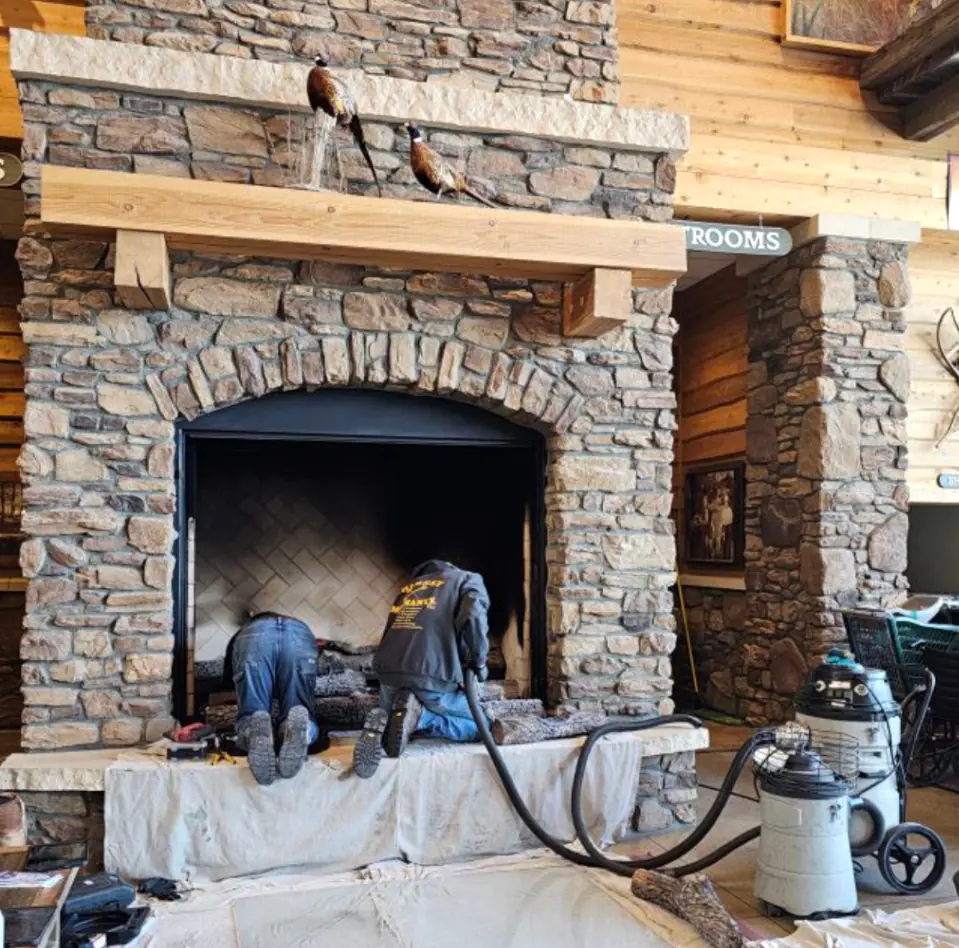
A typical sweep cleans the firebox, smoke shelf, and flue, then vacuums debris, according to HomeGuide’s 2026 guidance. CSIA says a complete sweep covers the flue and smoke chamber—not only the firebox—so ask whether the scope includes those areas.
HomeGuide estimates a typical visit at 1 to 2 hours, or about twice that if the chimney has not been cleaned in over a year. Those are general estimates, not a promised duration for a particular appointment; the appliance and condition affect the work.
Chemical creosote products do not replace mechanical sweeping or an annual inspection. CSIA notes that deposits and debris can remain on the smoke shelf, baffle, or offsets, so a product added to a fire is not a substitute for having the chimney checked.
Need help now? (720) 780-8924
When Should You Book a Chimney Sweep?
Book an annual inspection even when the fireplace appears clean. Arrange an earlier visit for glazed creosote, falling debris, smoke entering the room, a downdraft, or a suspected nest; stop using the fireplace if smoke spills indoors or you see a possible obstruction.
Fall is the busy season for chimney service, so plan ahead if you want the fireplace checked before regular use. Denver Chimney Sweep Pros serves Denver and towns within 60 miles and comes to your home. You can book a chimney sweep service or contact us to arrange a visit.
A sweep is different from an inspection, and some fireplaces need both. For a closer look at the service itself, read whether a chimney sweep is worth it.
Frequently asked questions
Does a gas fireplace chimney need an annual inspection?
Yes. CSIA recommends annual inspection of gas-heated chimneys because nests, debris, or corrosion can obstruct or damage the flue. A sweep can determine whether cleaning or another service is needed.
How often should a wood stove chimney be swept?
Have it inspected at least once a year, then sweep according to the deposits and the appliance’s condition. Burning unseasoned wood or restricting air can speed up creosote formation, so do not rely on a fixed number of fires.
What should I do if I see shiny black creosote?
Stop using the fireplace and arrange a chimney inspection. Shiny, hardened creosote is a glaze, and CSIA recommends sweeping a masonry fireplace chimney sooner if any glaze is present.
Should I have the chimney checked after a chimney fire?
Yes. A fire can damage masonry or flue components even when the damage is not easy to see from the firebox. CSIA recommends a Level 2 inspection after a chimney fire, which includes a video scan.
Schedule Your Chimney Inspection
Arrange an annual check or book a sweep when deposits or warning signs call for one. Call (720) 780-8924 or use our contact page to book.