
Is a Chimney Sweep Worth It?
Yes, chimney sweeps are worth it when you burn wood, see soot or debris, or need to check whether the flue is clear. A professional sweep removes deposits and can identify damage that cleaning alone will not fix.
Need help now? (720) 780-8924
Are Chimney Sweeps Worth It for a Denver Fireplace?
A sweep is worthwhile because deposits and blockages can build up out of sight, even when a fireplace seems to work normally. Creosote forms as smoke cools and condenses inside the chimney; restricted airflow, unseasoned wood and cool flue temperatures can speed its buildup, according to the Chimney Safety Institute of America (CSIA).
A professional cleaning removes soot and creosote instead of leaving them in the flue, smoke chamber or smoke shelf. It also gives you a chance to identify a blockage or damage before you depend on the fireplace during cold weather. Denver Chimney Sweep Pros offers chimney sweeps starting at $59.
Choose a Sweep, Inspection, or Deeper Check for Your Chimney
Routine use, with no major changes
An annual inspection checks the chimney’s condition, deposits and clearances. NFPA 211 calls for an inspection at least once a year; cleaning or repairs follow when the inspection shows they are needed.
Soot, glaze or falling debris
Book a sweep when deposits need mechanical removal, or when debris falls into the firebox. CSIA recommends sweeping a masonry fireplace chimney at 1/8 inch of sooty buildup, or sooner if any glaze is present.
A fire, sale, or change to the fireplace system
Ask about a Level 2 inspection after a chimney fire, before a sale, or when relining. CSIA’s inspection procedure calls for a video scan at Level 2, which adds a view inside the flue.
Signs Your Fireplace or Chimney Needs a Sweep
These signs can point to deposits, an obstruction or a flue problem. Stop using the fireplace if smoke enters the room or you see a possible blockage, then arrange a professional check.
- Creosote or masonry debris in the firebox — Material falling from above may mean deposits or masonry are loose in the chimney.
- Smoke coming into the room — Smoke spillage when a fire is lit can signal a draft or flue issue that needs inspection.
- Downdrafts — Air and smoke moving down the chimney can make the fireplace smoky and may indicate a blockage or airflow problem.
- A nest or animal in the flue — An obstruction can interfere with venting. Don’t reach into the chimney; have a sweep check it.
Need help now? (720) 780-8924
What Happens During a Professional Chimney Sweep
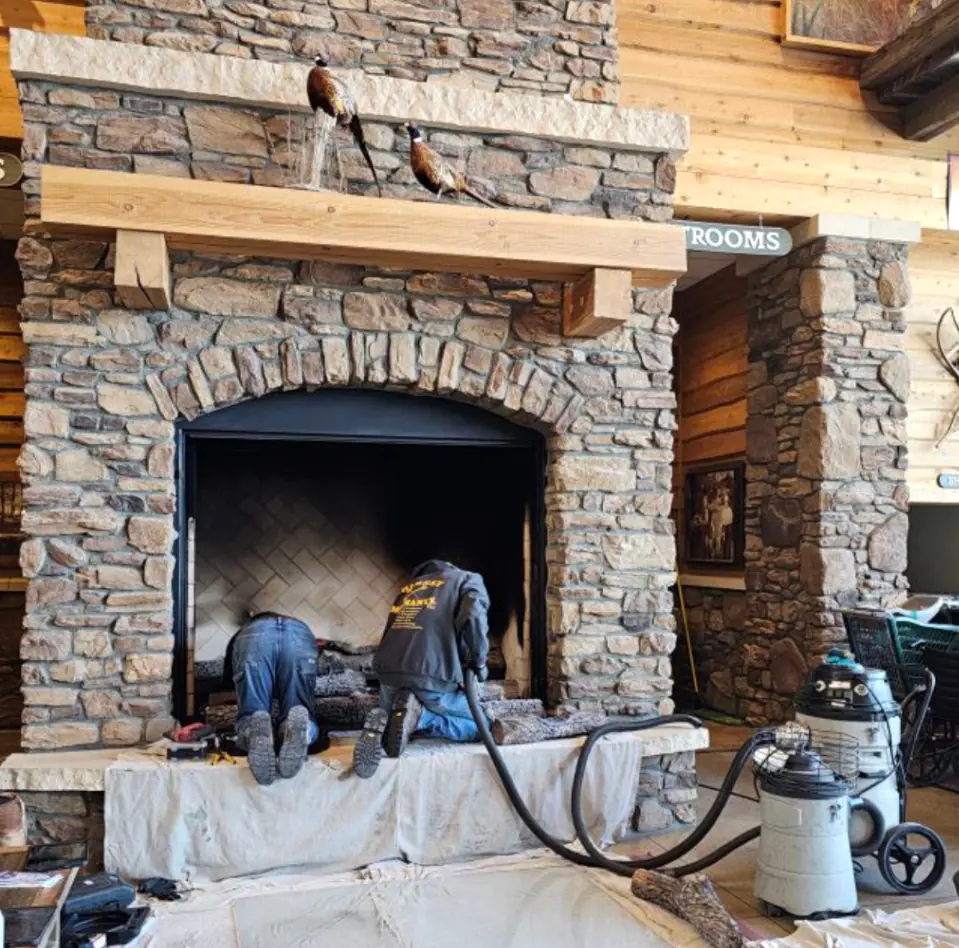
A sweep typically cleans the firebox, smoke shelf and flue, then vacuums debris. HomeGuide’s 2026 guidance says a typical visit takes 1 to 2 hours, or about twice as long if the chimney has not been cleaned in over a year. The actual work depends on the chimney’s condition.
- Describe what you noticed — Tell the sweep about smoke, downdrafts, falling debris or the last time the chimney was cleaned. Check whether you have seen any new signs since the fireplace was last used.
- Let the fireplace cool — Do not use the fireplace before the visit. Check that no embers remain and the hearth and firebox are cool to the touch.
- Inspect the firebox — The sweep checks the firebox for visible soot, debris and signs that the chimney needs attention. Note any loose or damaged-looking material you can see.
- Check the smoke shelf and chamber — Soot and debris can collect above the firebox, not just where the fire burns. CSIA says a complete sweep covers the flue and smoke chamber, not only the firebox.
- Sweep the flue — Mechanical brushing loosens deposits inside the flue. The check afterward is whether soot or creosote remains that calls for more cleaning or further assessment.
- Remove the loosened debris — The sweep vacuums debris from the cleaning process. Check that the firebox and smoke shelf are clear of the material removed during the visit.
- Review what the chimney needs next — Ask whether the findings point to additional cleaning, a repair or an inspection beyond routine service. Keep the findings so you can act on any issue before using the fireplace again.
When Sweeping Alone Won’t Solve a Chimney Problem
Cleaning removes deposits; it does not repair cracked flue tiles, loose masonry, a damaged chimney cap or a draft problem. If smoke continues to enter the room after cleaning, or you notice damage, stop using the fireplace and arrange an inspection or repair rather than treating the symptom as soot alone.
Chemical creosote products are not a substitute for mechanical sweeping and an annual inspection, CSIA notes. They do not remove debris from areas such as the smoke shelf, baffle and offsets. A chimney sweep service can check whether deposits need removal and whether the condition calls for more than cleaning.
Denver Action Days Can Change When You Use a Wood Fireplace
From November through March, indoor burning restrictions apply on Action Days in Denver and several nearby counties. The Colorado Department of Public Health and Environment explains that exemptions depend on the device and other conditions; some masonry fireplaces may be used only with approved inserts or gas or electric devices, and local rules still apply. Check the current Colorado indoor-burning guidance before lighting a fire on an Action Day.
The state posts the Denver-area air forecast daily at 4 p.m. A clean chimney does not exempt a fireplace from an Action Day restriction, so check the forecast as well as the condition of your flue.
Need help now? (720) 780-8924
Book a Denver Chimney Sweep Before the Next Fire
Fall is the busy season for chimney service, so book within days if you plan to use your fireplace soon or have noticed smoke, downdrafts or falling debris. When you book, describe the fuel type, symptoms and any known changes to the fireplace; that helps identify whether you need a sweep, an inspection or both.
Denver Chimney Sweep Pros provides free in-home inspections and serves Denver and towns within 60 miles. To arrange a visit, call (720) 780-8924 or contact us.
Frequently asked questions
Should I book a chimney sweep before Denver’s fall burning season?
Booking before fall can help you get the chimney checked before you plan to use the fireplace. Ask for a sweep if you see deposits or debris, and remember that Action Day burning restrictions still apply from November through March.
Can a chimney sweep tell me whether my fireplace is safe to use?
A sweep can identify deposits and visible problems during the visit, but cleaning does not repair damaged parts. Ask what the inspection found and whether the chimney needs a repair or a more detailed inspection before use.
What should I do if smoke comes into the room from my fireplace?
Stop using the fireplace and arrange a professional inspection, since smoke spillage can indicate a draft problem or blockage. Mention when it happens and whether you have also noticed downdrafts or debris.
Does a gas fireplace chimney need an annual inspection in Denver?
Yes. CSIA advises annual inspection of gas-heated chimneys because nests, debris and corrosion can block or damage the flue. An inspection can check for those issues even when you do not burn wood.
Get Your Chimney Checked
Tell us what you’ve noticed and book a chimney sweep or inspection at (720) 780-8924.