
What Does a Chimney Sweep Include?
A chimney sweep cleans the firebox, smoke shelf and flue, then removes soot and debris. A complete sweeping covers the smoke chamber and flue—not just the firebox—according to CSIA.
Need help now? (720) 780-8924
What Does a Chimney Sweep Include From Firebox to Flue?
A sweep removes soot and creosote from the areas smoke passes through. That usually means the firebox, smoke shelf, smoke chamber and flue, followed by vacuuming the loosened debris. CSIA notes that cleaning only the firebox is not a complete chimney sweeping.
The sweep also looks for visible deposits, obstructions and signs of damage while working. Cleaning and inspection are related, but they are not the same task: NFPA 211 calls for an annual inspection of chimneys, fireplaces and vents for soundness, deposits and proper clearances, with cleaning or repair as needed.
For a routine cleaning, ask for a chimney sweep service that addresses the full smoke path. A chimney inspection can help identify conditions that brushing alone will not resolve.
What Happens During a Professional Chimney Sweep?
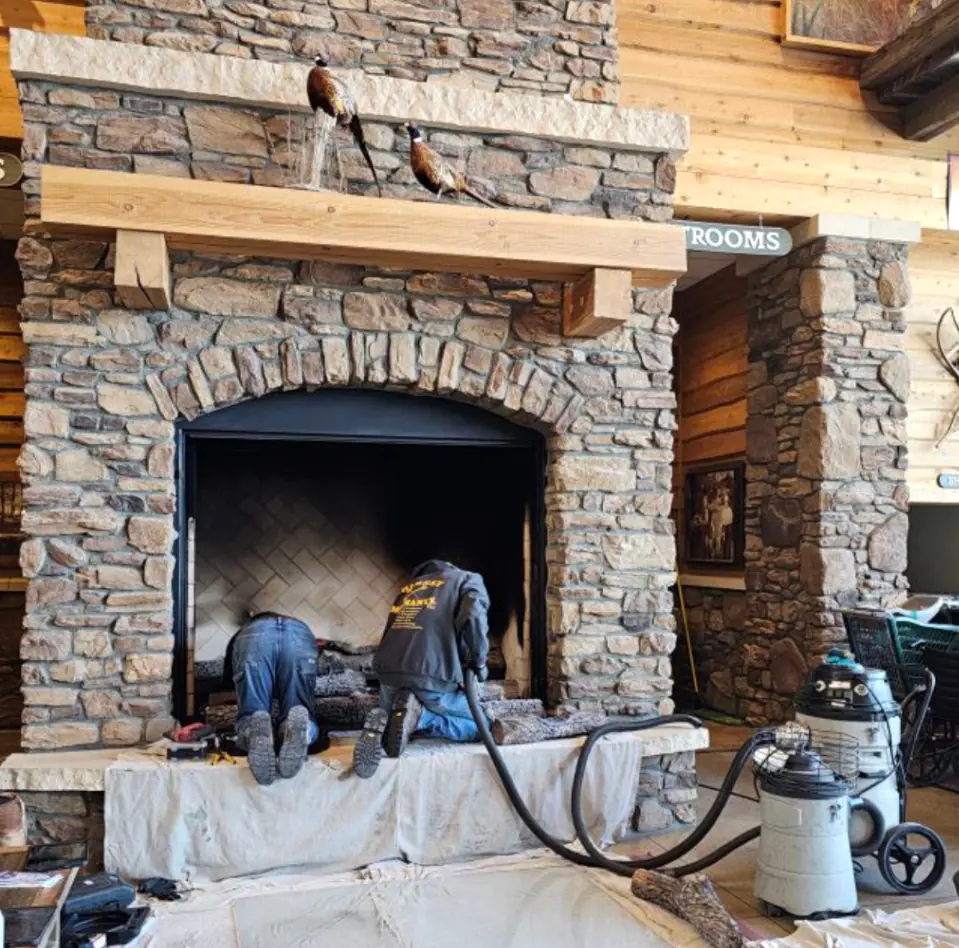
A professional cleaning follows the smoke path from the fireplace toward the chimney top, then checks that the work area and fireplace are clear. The exact work depends on the fireplace and what the sweep finds.
- Check the fireplace and chimney opening — The sweep looks over the firebox, damper and visible masonry before cleaning. This establishes whether debris, damage or an obstruction needs attention before brushing begins.
- Protect the hearth and room — A drop cloth and dust-control equipment help contain soot near the fireplace. The sweep checks that the work area is protected before loosening deposits.
- Remove loose firebox debris — Ash, loose soot and fallen masonry are cleared from the firebox so they do not mix with material brushed down from above. The sweep checks whether more debris is falling from the smoke shelf.
- Clean the smoke shelf and smoke chamber — These areas can collect soot and creosote above the firebox opening. A brush and vacuum remove deposits, and the sweep checks for remaining buildup or visible damage.
- Brush the flue — A chimney brush on extension rods is worked through the flue to loosen deposits from its interior. The sweep checks the flue for buildup and obstructions as the cleaning progresses.
- Vacuum the loosened debris — A vacuum collects soot and creosote brought down during brushing. The sweep checks the firebox and work area for leftover debris rather than leaving it to enter the room later.
- Review what the cleaning revealed — The sweep checks the cleaned areas for deposits, blockages and visible defects that may need a closer inspection or repair. If conditions call for a video scan, that is a separate inspection level, not simply another pass with the brush.
Which Signs Mean Your Fireplace Needs a Sweep?
Visible debris or a change in how smoke moves through the fireplace is a reason to stop using it until the chimney is checked. HomeGuide lists these common signs that a chimney may need sweeping:
- Creosote or masonry in the firebox — Falling flakes or pieces can indicate deposits or material coming loose higher in the chimney. Avoid lighting another fire until a sweep checks the source.
- Smoke entering the room — Smoke spilling into the living space can point to a draft problem or blockage. Do not keep burning to see whether it clears; have the flue examined.
- Downdrafts — Air moving down the chimney can interfere with safe venting. A sweep can check for obstructions and assess the chimney’s condition.
- A nest or animal in the flue — An animal or nest can obstruct exhaust gases. Do not reach into the chimney or light a fire to drive it out; arrange professional removal and a flue check.
Need help now? (720) 780-8924
Does a Routine Sweep Need a Video Inspection Too?
A standard cleaning and an in-depth inspection address different needs. The right choice depends on whether the chimney is in routine use or something about the appliance, structure or history has changed.
Routine sweep with a Level 1 inspection
This is the usual option for annual maintenance when you have not changed the appliance and no known event has affected the chimney. CSIA describes Level 1 as the routine inspection for cleaning and annual checks.
Level 2 inspection with a video scan
Choose this when buying or selling a home, relining the chimney, changing the appliance, or after a fire or weather event. CSIA’s Level 2 procedure requires a video scan, which lets the inspector examine portions of the flue that are not visible from the fireplace.
Repair assessment
A crack, damaged masonry or persistent smoke problem may need repair rather than more brushing. The sweep can identify the concern and recommend an appropriate inspection or repair service.
Why Creosote Buildup Changes What a Sweep Must Remove
Creosote forms when smoke cools and condenses inside the chimney. CSIA explains that restricted air, unseasoned wood and cool flue temperatures can speed its formation. It may look flaky, sticky and tar-like, or shiny and hardened; the appearance affects how difficult it is to remove.
For a masonry fireplace chimney, CSIA recommends sweeping when sooty buildup reaches 1/8 inch, or sooner if any glaze is present. Factory-built fireplaces should be swept when there is any appreciable buildup. A surface treatment does not replace mechanical sweeping: debris still needs to be removed from areas such as the smoke shelf and flue offsets.
Do not scrape or chip hardened deposits yourself. A professional can determine whether the buildup can be mechanically removed and whether the chimney needs a closer inspection before you use it again.
What Should You Do if Smoke or Debris Returns?
A clean firebox does not prove the entire chimney is clear or sound. If smoke still enters the room, debris keeps falling, or draft problems continue after cleaning, stop using the fireplace and request an inspection. Repeated symptoms point to a condition that brushing alone may not fix.
Do not burn a fire to test a suspected blockage, and do not use chemicals as a substitute for a mechanical sweep. CSIA advises that chemical creosote products do not remove debris from the smoke shelf, baffle and offsets. Tell the sweep what you observed and whether the problem began after a storm, a change in use or a chimney fire.
Need help now? (720) 780-8924
How Denver-Area Action Days Affect Fireplace Use
A sweep cleans the chimney, but it does not change the rules for burning on a restricted day. From November through March, indoor burning restrictions can apply on Action Days in Denver and nearby counties. CDPHE explains which devices may qualify for exemptions and when local rules still apply; check its indoor burning guidance before lighting a fire on an Action Day.
Denver also prohibits operating a solid-fuel-fired device on a high-pollution day unless the device is approved by Denver or the state health department. A clean flue does not make a prohibited fire permissible, so check the current air-quality notice as well as the condition of the chimney.
When to Book a Chimney Sweep in Denver
Book before regular fireplace use if you have not had the chimney inspected, or sooner if you see falling debris, smell smoke in the room or notice a draft problem. HomeGuide estimates that a typical sweep takes 1 to 2 hours; a chimney that has not been cleaned for over a year may take about twice as long. The time can vary with the chimney’s condition.
Denver Chimney Sweep Pros offers chimney sweeps from $59 and free in-home inspections. To arrange service, use our contact page and share whether you have a wood-burning fireplace, what symptoms you have noticed, and when the chimney was last cleaned. For details about the price range, see how much a chimney sweep costs in Colorado.
Frequently asked questions
How long does a chimney sweep take?
HomeGuide says a typical chimney sweep takes 1 to 2 hours. If the chimney has not been cleaned in over a year, the visit may take about twice as long because more buildup can require additional work.
Does a chimney sweep clean the smoke chamber?
A complete sweeping includes the smoke chamber and flue, not only the firebox, according to CSIA. The smoke shelf and other areas along the smoke path can also collect deposits that need to be removed.
Can chimney-sweeping logs replace a professional cleaning?
No. CSIA says chemical creosote products do not replace mechanical sweeping and an annual inspection. The smoke shelf, baffle and flue offsets can still hold debris that needs to be removed.
Does a gas fireplace chimney need to be swept?
A gas-heated chimney still needs an annual inspection, according to CSIA. Nests, debris and corrosion from modern high-efficiency appliances can block or damage the flue even when you do not burn wood.
Schedule a Chimney Sweep
Arrange a sweep or free in-home inspection with Denver Chimney Sweep Pros. Share what you have noticed so the visit can address the right areas.